When can panting be a sign of pain? What can you do as a dog owner? You'll find out here! In addition, for this article we have advice from veterinarian Mag.med.vet. Emin Jasarevic. So be curious!

When we think of dogs, we may also think of our pets' famous panting. Surely each of us has observed it at least once.
Sometimes this panting is almost dangerous for the dog. Add a loud snort and many dog owners get scared.
Basically, panting is part of a dog's normal breathing. Just as we sometimes run out of breath, so can our four-legged friend.
Artboard 26
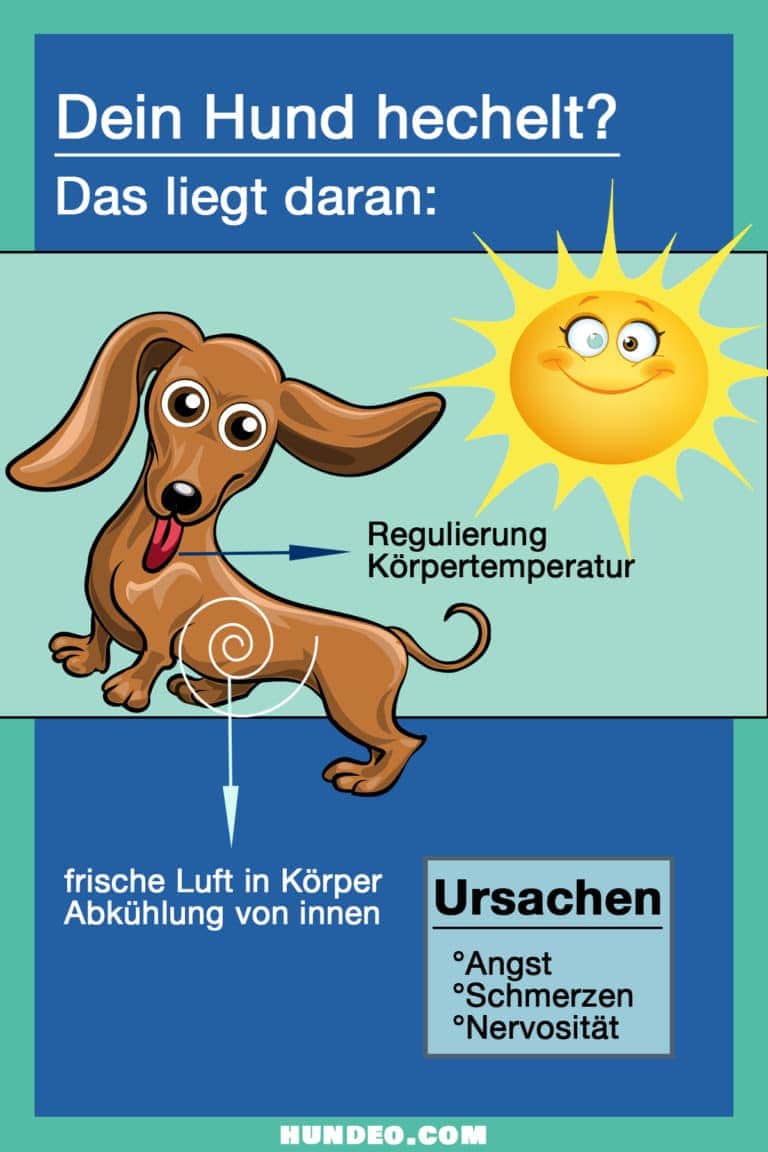
The regulation of body temperature in the dog is largely controlled by the upper respiratory tract. The upper respiratory tract includes the pharynx, nasal cavity, larynx, and trachea.
Unlike humans, our dogs have few sweat glands on their bodies. The few sweat glands are located on the paw pads and nose leather. Panting allows fresh air to enter the animal's body, cooling it from the inside out.
In principle, this method is similar to sweating. However, it is not as effective as for us humans. In any case, you should make sure that your pet has fresh water and a shady spot. This will allow him to recover more quickly after strenuous activities.
At the height of summer, you shouldn't go for walks and wild play adventures at lunchtime, but rather wait for the cooler evening hours. Dogs know when they have had enough of playing, but the blazing sun is not good for them.
If you do decide to go for a walk in the blazing sun, make sure your pet is not overexerting himself.
After the walk, make sure there is plenty of water and shade. You should also take a few short breaks to keep your pet from overexerting himself.
In the "dead space", which extends from the mouth up to and including the windpipe, considerably more air circulates due to the panting mechanism. However, this air does not reach the lungs. The purpose of this process is therefore not to supply the dog with cold air, but to allow liquid to evaporate through this constant flow of air.
Evaporative heat is extracted, similar to human sweating. This causes the animal's body temperature to drop. At normal temperature, the dog can take up to 30 or even 40 breaths per minute.
If he strains himself or is exposed to great heat, he will reach 300 to 400 breaths. This means that your protégé increases its breathing rate tenfold. Evolution has created a particularly efficient system with this process! But what makes this frequency possible?
There are two reasons for this: Saliva production is designed for the so-called "drooling" that we know all too well from dogs. His tongue does not dry out as it does in humans. In addition, dogs breathe much more shallowly than humans.
So dogs do not hyperventilate when they pant. A human would not be able to take that many breaths per minute.
Interestingly, panting varies from dog to dog, and especially from breed to breed.
Small dogs pant less because they have a smaller body volume. This allows the temperature to be controlled more quickly.
Large dogs need to pant much more to avoid overheating. The drooling and panting is therefore much more intense than in their smaller counterparts.
Panting can be a problem in short-nosed breeds. This includes the Pug. Breeding has shortened the airways so the animal cannot pant well.
During periods of intense heat or play, you will need to pay special attention to the panting of this breed. You should also keep a close eye on your Pug during long walks.
Dogs can pant not only to cool themselves down, but also out of fear and nervousness. Some dogs are terrified of thunderstorms or cannot stand the noise of fireworks. The animals can panic, which can be recognized by their wide-open eyes. This is usually accompanied by short-breathed panting.
In most cases, panting itself is not a cause for alarm, but you should still pay attention to why the animal is panting. If it is due to anxiety, you may want to gently reassure it to take away some of the anxiety.
Not only fear, but also pain. can be a reason for panting, especially in older dogs.
So constant panting for no apparent reason can be a sign of pain. Your dog's body language is crucial in determining whether it is real pain, anxiety, or something else.
If your dog is panting excessively, it is imperative that you see a veterinarian to have the problem diagnosed!
Panting is a normal means of heat regulation in dogs. However, if your dog is panting at rest for no apparent reason, there may be several causes:
If your dog is panting at rest for no apparent reason, it is important to see your veterinarian. He can determine the exact cause and recommend appropriate treatment.
It is always better to be safe than sorry, and to seek professional advice when dealing with unexplained behavior.
If your dog pants when you pet him, it could be for a number of reasons. Here are some reasons why dogs may pant in these situations:
To understand why the dog is panting in this situation, it is important to observe the dog's overall behavior and body language.
Does he show other signs of relaxation, such as a limp body and wagging tail? Or does he show signs of nervousness by putting his ears back or avoiding eye contact?
By interpreting all of your dog's body language, you can better understand how he is feeling right now. However, if you are concerned or unsure about your dog's behavior, it is always a good idea to consult a veterinarian or behaviorist.
Your dog's panting in the car can have several causes. Here are some possible causes:
If your dog is panting in the car, it's important to consider the context. If he is showing signs of stress or anxiety, gradual desensitization and counter-conditioning exercises may help reduce his fear of driving.
If overheating is the problem, make sure the car is well ventilated and avoid driving on hot days. If you are concerned about your dog's health, it is always advisable to consult a vet.
Panting is a normal and natural way for dogs to cool themselves and increase oxygen levels in the blood. However, there may be situations where panting is a cause for concern.
Here are some situations where your dog's panting may be a cause for concern:
If you're concerned about your dog's panting, it's always a good idea to see your veterinarian.
A veterinarian can determine the exact cause and make appropriate treatment or husbandry recommendations. It is better to be safe than sorry and take your dog's health seriously.
You're probably familiar with dog panting, which is usually accompanied by heavy salivation.
Panting is completely normal in quadrupeds and is nothing to worry about. It is the animal's way of cooling down its body temperature.
So it's normal for your dog to start panting after long walks, strenuous activity, wild play or in the heat.
It is important to keep an eye on him and provide adequate shade and fluids.
Fear and nervousness can also cause a dog to pant heavily. This can be seen in some dogs on New Year's Eve or during a thunderstorm. At such times, it is important to calm the animal.
Panting can be dangerous in small breeds or when it occurs for no apparent reason.
Then it may be a sign of pain and you should definitely see a vet!