

- Tartar forms from hardened dental deposits (plaque)
- Sugar and grains in the food promote tartar buildup
- Small breeds are especially at risk
- Left untreated, tartar can lead to tooth loss and organ damage
- 5 tips for prevention: the right food, chews, dental checks, dental care gel, enzyme powder
Tartar is no rarity in dogs. Left untreated, it grows larger over time and can lead to tooth loss and organ damage. Discoloration on the teeth is not a purely cosmetic problem.
How does tartar form?
After every meal, food residue clings to the teeth. Normally it gets worn away by chewing or by saliva. If the food residue can't be worn away, it becomes a breeding ground for certain bacteria.
These multiply and, together with food residue, minerals from saliva, and bacteria from the oral mucosa, form a solid layer on the tooth surface: plaque. This dental deposit has a rough surface that new bacteria can cling to easily. Once it has hardened significantly and becomes visible to the naked eye, it's called tartar.
Causes
Bacteria feed mainly on sugar. A lot of sugar in the food makes bacteria in the mouth grow more and become more stubborn. Starch from grain products also promotes their growth. Sugary food and high grain content are therefore risk factors for tartar.
Dry food vs. wet food vs. raw feeding
The abrasion from chewing dry food cleans the teeth mechanically to some extent: this abrasion is missing with wet food. However, most dogs don't chew dry food as thoroughly as we tend to think: their teeth are built for tearing, not for grinding down small pieces. The mechanical cleaning from dry food is therefore far less intense than often claimed: chewing on bones is more effective.
On top of that, many types of dry food contain preservatives and high carbohydrate content, which can promote the growth of unwanted bacteria. With high-quality wet food or raw food, this is less likely.
The risk in small breeds
Small dogs are more at risk because of the shorter snouts that breeding has produced: less room for many teeth often leads to misaligned teeth. The tight gaps between the teeth can't be cleaned by chewing: bacteria and food residue settle in quickly.
On top of that, small dogs pant more often. Constant panting dries out the mucous membrane, leaving too little saliva in the mouth, and bacteria settle in more easily.
Tooth loss possible
If tartar isn't treated, bacteria attack the gums. They become inflamed, and gum pockets form. The gums keep receding, and the gums, teeth, and bone get damaged. The tooth loosens and eventually falls out.
Through gum pockets, bacteria can enter the bloodstream and affect organs. In some cases, the kidneys, liver, or heart can be damaged.
How to spot tartar
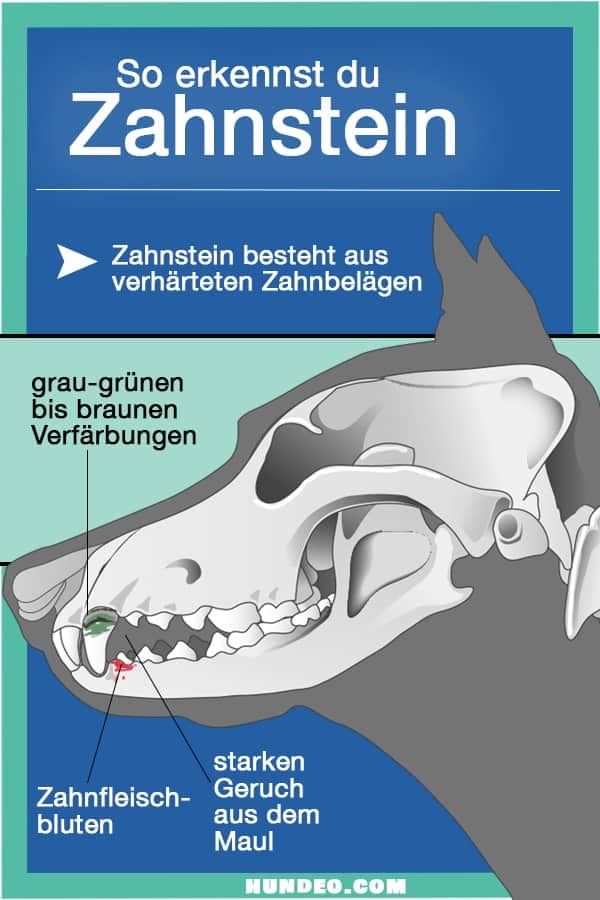
You can recognize tartar by its gray-green to brown discoloration. It usually starts at the base of the tooth and spreads across it. The canines, carnassials, and molars of the upper jaw are most often affected. Take a close look at the teeth and at the transition from gum to tooth.
Tartar is usually accompanied by strong bad breath. Gum inflammation can lead to bleeding gums. With pronounced inflammation, the tooth becomes abscessed. Since dogs often hide mild pain, you can tell a toothache is present when the dog eats less.
What you can do about tartar
1. Remove soft deposits at home
If it's still just a simple dental deposit, it can be carefully removed with a dog toothbrush or a brush with soft bristles. If the deposit is stubborn, you can apply a special dental gel beforehand: the enzymes it contains reduce the deposit and help prevent new buildup. The gel is harmless to dogs when licked off.
Important: as soon as the deposit has hardened into real tartar, it can no longer be dissolved at home or scraped off safely. Hardened tartar has to be removed by the vet.
2. Have it removed by the vet
Hardened tartar always belongs in the hands of the vet, no matter how calm the dog is. Scraping at it yourself injures the gums and tooth enamel and makes it worse. At home, you can only tackle soft dental deposits. Even with severe toothache, refusal to eat, or bleeding gums, the vet is the right place to go.
The vet removes the tartar with an ultrasonic device under anesthesia. Depending on the severity and the vet, you should expect to pay several hundred euros: on top of that comes the risk of anesthesia.
5 tips for prevention
Tip 1: The right diet
Food without sugar and high grain content protects dental health in the long run. The more sugar and starch in the food, the more food the bacteria in the mouth have.
Tip 2: Chews and toys
The more chewing happens, the better the teeth are cleaned naturally. Special dog toys for chewing and gnawing, natural chew bones, and cartilage all contribute to dental health.
Tip 3: Dental checks from the start
If the dog gets used to dental checks as early as puppyhood, the procedure is easier when it really counts. Look at the teeth regularly from the start, do control checks, and occasionally brush gently: with a soft brush and special dog toothpaste.
Tip 4: Use a dental care gel
There are dental care gels for dogs that kill bacteria in the mouth. This prevents bacteria from settling in and tartar from forming. Apply the gel regularly with a soft toothbrush or a finger glove.
Tip 5: Supplement with enzyme powder
Enzyme-based powders can be sprinkled over the food daily and help curb the buildup of dental deposits (plaque) before they can harden.
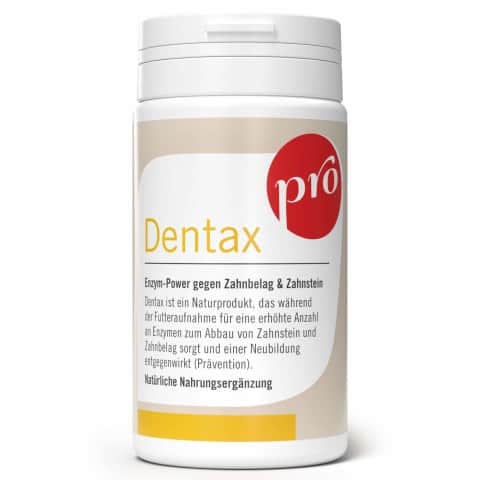
Anifit Pro Dentax
Enzyme powder for daily prevention of dental deposits. Sprinkled over the food, it supports daily dental hygiene.
- Enzyme-based against plaque buildup
- 60 g, to sprinkle over the food
- A supplement to tooth brushing, not a replacement
- Save 10% with code JETZT10
6,89 €
Related topics
Were you paying attention?
Question 1 of 3Why are small dog breeds especially prone to tartar?
You'll find all the topics around dog ownership at Hundeo Pro. From training and nutrition to health: structured courses with video instructions, training tracking, and personal help from real trainers when problems come up.


