Diarrhea often means a disorder in the organism due to the gastrointestinal tract.
Definition and symptomatology
The medical profession uses the technical term diarrhea to describe diarrhea. It is usually due to a malfunction of the stomach, intestines or both together. Diarrhea is often a side effect of the flu, other infections or general illnesses.
Diarrhea as a symptom of a gastrointestinal problem or as an accompanying symptom are not the only reasons. Your dog's emotional state also has an effect on the gastrointestinal tract. It can also be the trigger for diarrhea.
The symptoms are as follows: Bowel movements occur more than three times a day and are characterized by watery or mushy stools.
This symptomatology does not occur alone. Diarrhea is often accompanied by other symptoms. Below you will find the most common accompanying symptoms that can occur in your pet:
- Pain in the complete abdominal area (usually cramp-like)
- Flatulence
- Nausea as well as vomiting
- Loss of appetite
- Tiredness and fatigue
- Increased body temperature
- decreased urine output
- Changed urine color
- Dehydration
The causes of diarrhea are varied. As a rule, a distinction is made between acute and chronic diarrhea.
Acute diarrhea lasts between one and two days on average and should not last longer than three days at most. It is not normally a cause for concern. Stress or incorrect food intake are the most common causes of acute diarrhea.
You should be more concerned if your dog's diarrhea lasts longer than three days and is accompanied by other symptoms. If the diarrhea lasts longer than three days, doctors usually refer to it as chronic diarrhea.
Since there are various causes of diarrhea, we have summarized the most common causes for you below:
- Spoiled food
- Incorrect diet
- Allergies or intolerances to treats or the food
- Change of diet
- Toxins and other harmful agents
- Medication side effects
- Diseases or other disorders of the gastrointestinal tract
- mental illnesses (anxiety disorder or stress factors)
- Other diseases Viral and bacterial infections
- Autoimmune diseases
- Kidney or liver disease
- hormonal disorders
Special caution with certain symptoms
Special care should be taken with the following symptoms:
If your pet's condition changes spontaneously and he has (bloody) diarrhea and additional tiredness, restlessness or cramps, you should consult the vet. In the case of poisoning, increased saliva, bleeding in the urine, tremors or vomiting may also occur.
It is best to leave right away and try to reach the practice by phone only on the way. On weekends or holidays, go to the emergency veterinary practice. A quick look on the Internet will show you the practices that are open on that particular weekend.
Indeed, these symptoms often indicate poisoning. Unfortunately, many quadrupeds still die because of poisonous bodies distributed in forests, parks and meadows.
For this reason, always keep a close eye on your charge when you're out and about with him. Dogs love to sniff out potential snacks. That's why poison baits are often hidden in treats or meat.
Pay attention to the dog food
Dog food is a common trigger for diarrhea in dogs. Cheap food products in particular contain ingredients that can lead to diarrhea.
These varieties include particularly high-carbohydrate feed that contains added sugar. In addition, products consisting of many animal by-products and mostly hard-to-digest proteins.
A change of food can also lead to diarrhea in your dog. For this reason, make sure that you change his food gradually. Only feed your dog high-quality food.
Also check the amount of food you give your four-legged friend each day. It is better to give a little food several times a day than to give a large amount all at once.
A change of feed should last at least 4 days.
If your pelt is sensitive, you can extend the duration to one or two weeks.
Mix smaller amounts of the new food into the old food. At the same time, reduce the amount of the old feed. Gradually increase the amount of the new feed until the full ration is fed with the new feed.
Monitor your foster for intolerances. In the beginning, mild bloating is normal for the first few weeks. If there is diarrhea, you can slow down the duration of the change. If there is no improvement after two to four weeks, you may be better off using a different food.
Apart from the presumption of a Poisoning, there are other reasons to see a veterinarian.
In general, diarrhea should not last longer than three days. Even if the causes are not serious, chronic diarrhea must be treated.
If your pet's condition worsens, it is also advisable to consult a vet. A worsening of the condition occurs when your dog has other symptoms in addition to diarrhea.
If your pet has a fever of over 40 °C, please consult the vet immediately, even if it has only been present for a short time. The symptoms for which you should consult the vet immediately are
- Diarrhea - longer than three days
- bloody diarrhea, bloody urine
- bloody mucous membranes
- Abdominal pain
- Disturbances of consciousness
- Restlessness
- high fever (higher than 40 °C)
- Dog does not drink and eat
- Vomiting
A dog's stomach ache cannot be easily recognized by the owner, as your pet cannot communicate with you. For this reason, we would like to take this opportunity to let you know how you perceive your dog's abdominal pain:
For bellypain your faithful companion often has a cramped posture. The dog usually moves in a hunched posture, i.e. The back is rounded and the belly is usually slightly pulled in.
In addition, he has an increased flow of saliva and drools. As a result, he often licks his muzzle. Some dog owners also notice the abdominal pain when their four-legged friend makes strange, howling noises.
If the diarrhea is in a puppy, see your veterinarian immediately.
The puppy period goes up to 18 weeks of life, depending on the breed. A puppy, in contrast to an adult dog, can quickly become dehydrated. Since dehydration is life-threatening for the little four-legged friend, we recommend you to go directly to the vet.
Anyone who has ever had to deal with this discomfort knows how unpleasant it can become. Since the sphincter muscle does not function properly due to the diarrhea, you and your four-legged friend sometimes do not make it out of the house in time. So your four-legged friend does his business indoors.
An important tip from our side: Do not blame your protégé if he goes into the apartment with diarrhea. After all, he can not help it. It is advisable to remain calm and resort to alternatives.
If you have a garden or a balcony, it is best to open the doors. This way, your pet can quickly get some fresh air in case of an emergency and your home will be spared. A diaper is also a possible alternative.
If the diarrhea has only been present for a short time and there are no other symptoms, try to get the diarrhea under control yourself. Only if fever, increased salivation & Co. Are added or the diarrhea lasts longer than 3 days, please consult a veterinarian.
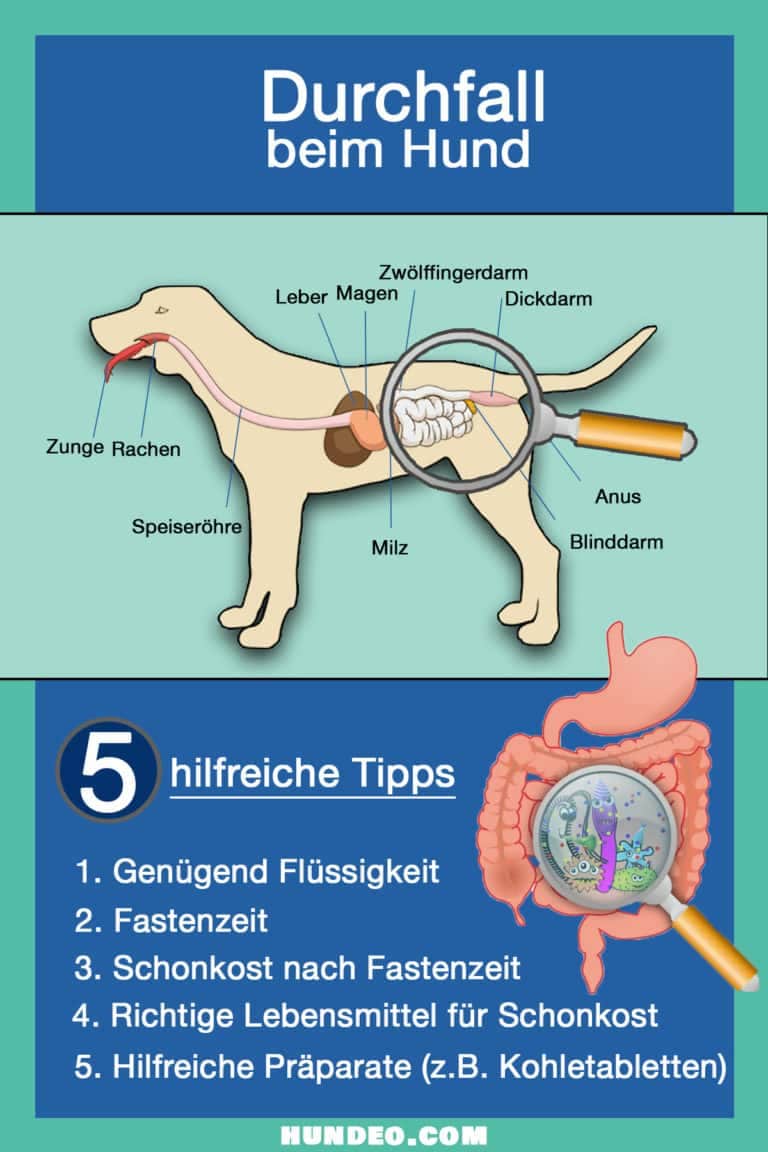
Sufficient fluids
Make sure your dog is drinking enough fluids. Additionally, place several water containers so that he can find the water at any time. Also try to encourage him to drink or combine it with playful activities.
Go on a diet
To stop your pet from suffering from diarrhea further, consider putting him on a diet. This diet should not exceed a period of 24 hrs.
If your dog does not eat any more food, this restricts the intestinal activity and the gastrointestinal tract comes to rest. Also, the deprivation of food encourages the animal to drink more.
Remember to Follow These Tips! Puppies must not be put on a 24-hour diet. Special care is required as they can dehydrate more quickly and lose energy.
A longer fasting period is risky for puppies under 6 months of age. Instead, you should switch to an easily digestible light diet. Slowly reintroduce your puppy to its usual food after 12-24 hours on a light diet so as not to overload the gastrointestinal tract.
Gentle diet
After a maximum of 24 hours, administer to your quadruped a Gentle diet. You can also find suitable food. The gentle diet ensures that your dog can be readjusted to a normal diet and that the intestines do not yet have to work intensively.
Suitable foods for light meals
The right Gentle diet you can buy in pet stores. We also recommend that you prepare your own food. At this point we will show you the suitable food to feed your pet again.
Rice
Cooked, unsalted rice is the ideal light diet for your four-legged friend. Make sure that the rice is cooked until very soft and cooled.
Low fat meat
Low-fat meat is also a good option. It can be found in poultry, especially chicken or turkey, and beef.
Cook the meat thoroughly and give it to your four-legged friend after it has cooled down sufficiently. When preparing the meat, it is best to make sure that it is cooked as fat-free as possible. Roasting in water or cooking in the oven are the best options here.
Cooked vegetables
Pumpkin, carrots and potatoes are ideal for your four-legged friend's digestion as they are easy to digest. It is best to cook the vegetables until really soft and puree them. Make sure that you do not season it and serve it chilled.
Contact vet
In case of regular or recurrent diarrhea, please contact your veterinarian. In this case, various causes can weaken your pet's intestines.
For example, your dog has been given antibiotics or has been eating the "wrong food" for a long time. A visit to the vet usually helps, as he can prescribe preparations that protect the intestines, build up the intestinal flora and stimulate intestinal activity.
Last but not least, we will provide you with helpful tips on how to prevent diarrhea in your four-legged friend:
Healthy dog food
Make sure that you provide your darling with high-quality dog food. Cold-pressed products and products without preservatives are ideal. The diet should always remain the same. This means that you stay with the same dog food if possible.
Fat free treats
Treats are the be-all and end-all in everyday dog life. However, ideally you should also pay attention to the quality of these products. Go for treats that are low in fat. There should also be no additives in them.
No raw fruits and vegetables
Fruits and vegetables are best given cooked - or soft-boiled - and pureed. Raw fruits and vegetables can cause diarrhea because they are difficult for a dog to digest.
Avoidance of milk and dairy products
If your four-legged friend often suffers from diarrhea, you should avoid milk and dairy products. As a rule, the animal cannot break them down optimally. As a result, the intestinal activity suffers. The diarrhea sets in.
Diarrhea in our dear four-legged friends is not a reason to panic - as long as the diarrhea does not occur at regular intervals and lasts more than three days.
Most often helps a Gentle diet out beyond a few days to stop it.
However, if this is not the case and your dog has other accompanying symptoms, you should call your veterinarian immediately. Get well soon!