

- Gum inflammation (gingivitis) is a common problem in dogs
- Symptoms: red gums, bad breath, loss of appetite
- Left untreated, it can lead to tooth loss and organ damage
Gum inflammation in dogs often starts with seemingly harmless bad breath. In the worst case, it leads to tooth loss and lasting organ damage. Over the course of their lives, up to 85 percent of all dogs develop gingivitis.
What is gingivitis?
Gum inflammation in dogs, known medically as gingivitis, is no minor matter. The causes are usually a combination of different factors: housing, living conditions, diet, and genetic predisposition. In veterinary practice, gingivitis is graded on an index from 0 to 3.
Untreated gingivitis not uncommonly turns into periodontitis. This causes the gums and the tooth-supporting structures to recede irreversibly and attacks the jawbone. The effects of gingivitis are considered reversible: the damage can be repaired with treatment. Periodontitis, on the other hand, leaves permanent marks: once the jawbone has been broadly damaged, it cannot regenerate.
What happens with untreated gingivitis?
- Receding gums
- Formation of gum pockets
- Exposure of the tooth roots
- Formation of pus
- Damaged jawbone (periodontitis)
- Loss of teeth
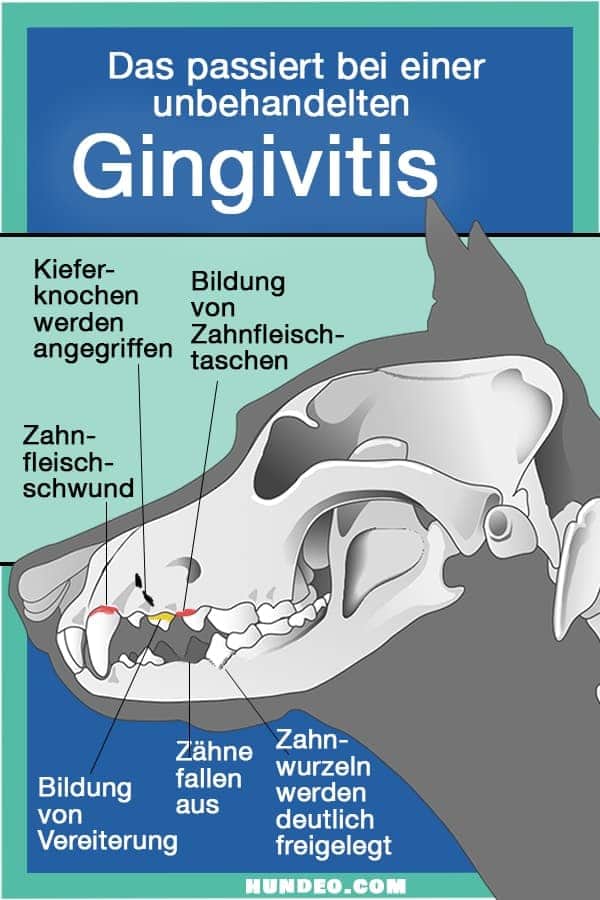
How gum inflammation develops
Larger dog breeds tend to develop it later in life, from around the 5th or 6th year. Diet matters for the bacterial flora in the mouth. Tough dry food on a regular basis keeps plaque and tartar buildup in check.
In some cases, though, the cause is a tumor in the soft tissue of the mouth or general injuries in the mouth area. Some breeds are genetically more prone to gingivitis: especially small dogs like the Pug, Pekingese, Shih Tzu, or Toy Poodle, where gum inflammation can show up even at a young age.
Symptoms
Since gingivitis is a complex inflammatory process, bacterial plaque plays a central role. There are two kinds of bacterial plaque:
- The soft form is easy to remove with regular dental care. Dogs have a naturally antibacterial saliva that works in their favor.
- The mineralized form: tartar: has to be removed by the vet.
In the early stage, most dogs show no unusual changes in behavior and keep eating as normal. Often the only early clue is the distinctive smell from the mouth. Unexplained bad breath without a change in food should be taken seriously too: it can point to gum inflammation or other conditions in the mouth, throat, or internal organs.
As the disease progresses, the following symptoms appear:
- Pus-filled and bloody saliva
- Refusal of food
- Cautious chewing or chewing on one side
- Weight loss
- Tooth loss
- Pain in the head and jaw
- Rubbing the head on the ground
- Bouts of fever, episodes of weakness
Persistent gum inflammation can lead to organ damage: bacteria from the mouth pass through the gums into the body and can attack the heart and kidneys.
Treatment
If you suspect gum inflammation, your dog needs to see the vet right away. Tartar is removed with dental instruments: in complicated cases at a specialist clinic, in most cases at the vet.
The type of treatment depends on the severity. For mild gingivitis, removing the bacterial plaque is often enough. The whole mouth still has to be disinfected: with rinses of saline solution and chlorhexidine, or a chlorhexidine gel that is rubbed into the gums.
Sometimes teeth that are already loose have to be pulled. While doing this, the vet measures how far the gums and jawbone have receded. The whole procedure usually takes place under general anesthesia. If bacteria from the mouth are already attacking internal organs, a short course of antibiotics follows. There are also homeopathic approaches (Calcium sulphuratum, Ferrum phosphoricum, Silicea) that some vets offer.
Related topics
Were you paying attention?
Question 1 of 3What sets gingivitis apart from periodontitis?
You'll find every topic around living with a dog at Hundeo Pro. From training to nutrition to health: structured courses with video instructions, training tracking, and personal help from real trainers when problems come up.


