
Key Takeaways
- Why Dogs Pull on the Leash: Common causes include excitement, prey drive, lack of training, fear, dominance, and pent-up energy.
- Training Tips: Stop walking, change direction, use rewards, give more exercise, and stick to a standard leash to break the pulling habit.
- Mistakes to Avoid: Don't jerk the leash, skip the retractable leash, and never use punishment or shock collars.
- Puppies and the Leash: Start early and be patient, it's the key to preventing pulling down the road.
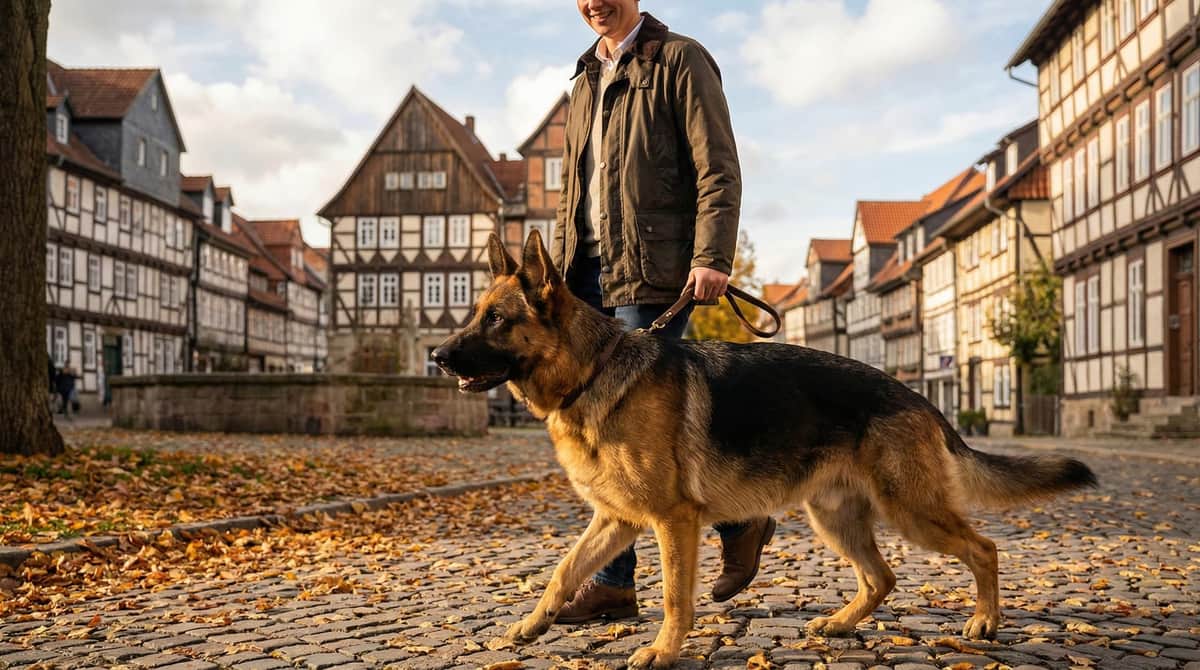
Walking together can be one of the best parts of having a dog. Your pup strolls calmly beside you, you both soak in the fresh air, pure bliss. But in reality? They're dragging you down the sidewalk like a sled dog. This article will help you turn those chaotic walks into something you actually enjoy.
Let's be real: Walking isn't much fun when you're fighting for control the entire time.
With puppies and small dogs, it's usually manageable. But with bigger, stronger dogs? That's a whole different ballgame.
Relaxed walks are so much better for both of you. With some patience and consistent training, your dog will figure that out too.
Why Does My Dog Pull on the Leash?

There are plenty of reasons. Think about your dog's personality. Are they naturally curious? Do they want to explore every last inch of the neighborhood? Hunting breeds, for example, tend to pull when they catch an interesting scent.
For every dog, a walk is an exciting adventure. There are so many smells to investigate and new things to check out.
Young dogs especially are super curious. Walking is still a brand-new experience for them. Nobody's taught them leash manners yet, and walking calmly beside their owner doesn't come naturally.
And honestly, why would they do it on their own when there's so much to sniff?
On the street, there's tons of distraction: people, other dogs, squirrels, you name it. Everything looks fascinating compared to you. Your dog's attention isn't on you.
It's on all those exciting things happening around them. No wonder they're not matching your pace.
A lot of dogs know their usual routes by heart. Maybe you walk to a park where your pup loves to play? Or to a friend's house where they always get a treat?
When they're extra excited about where they're headed, they pull even harder. They just want to get there as fast as possible.
Pulling tends to be worst at the beginning and end of a walk. That's totally normal. At the start, your dog is pumped about the walk itself.
And when you're getting close to home again, they want to get back quickly.
After all, they've got their territory to keep an eye on. Maybe they also know dinner comes after the walk. That's even more motivation to hustle home.
Keep in mind that many dogs simply walk faster than we do. They've got more stamina and want to be challenged. Most of the time, they genuinely don't understand that we don't want to go as fast as they do.
Pulling on the leash becomes a habit fast. Your dog wants to pick the route. When they spot something interesting, they want to go check it out.
And as fast as possible. If you let this happen, they reach their goal. They learn that pulling works, so they keep doing it.
A lot of dog owners assume their pup is being dominant when they pull on the leash.
But that's usually not what's going on. Dogs are simply excited and interested in everything around them. They often don't even notice when their owner slows down.
So don't punish your dog for it. They haven't learned any differently yet. What matters most is breaking this habit with a few smart techniques.
6 Possible Reasons
There are many reasons why your dog pulls on the leash. Here are some of the most common:
- Excitement: Your dog may just be pumped up and wants to rush toward new smells, people, or other animals.
- Prey Drive: Your dog may be following their natural instinct to chase or investigate something.
- Lack of Training: Your dog may never have learned proper leash walking or hasn't had obedience training.
- Fear or Stress: In some cases, pulling can signal fear or anxiety, for example, in an unfamiliar or scary environment.
- Dominance: Sometimes dogs try to take the lead by walking ahead or pulling on the leash.
- Pent-Up Energy: Sometimes dogs pull simply because they have too much energy and need to burn it off.
Puppy Pulls on the Leash: 4 Possible Reasons
It's totally normal for puppies to pull on the leash. Here's why:
- Curiosity: The world is brand new and exciting for puppies, and they want to explore everything. They pull to get to new smells, sounds, and places as fast as they can.
- Inexperience: Puppies don't know the rules yet. They haven't learned that pulling isn't okay.
- Energy: Puppies are little bundles of energy and can't wait to get moving and play.
- Fear: In some cases, a puppy may pull out of fear or insecurity.
To break the pulling habit, start training early and bring plenty of patience.
Reward your puppy for good behavior and stay consistent with your expectations. It's a learning process, but over time your puppy will figure out how to walk nicely on a leash.
Show your pup that pulling doesn't get results. If you don't break the habit, they won't stop on their own, they have no idea they're doing anything wrong.

Training isn't easy and will take some time. It's especially tough with older dogs.
They've been doing it for years. That's exactly why it's so important to start training puppies early.
Important: You have to be consistent. If your pup is sometimes allowed to pull and sometimes not, the training won't work.
If pulling is okay sometimes, training takes way longer, or they never learn at all. You need to make it off-limits every single time.
Your goal is to keep the leash loose at all times. That's only possible if your dog walks beside you at roughly the same pace.
Don't confuse this with the "heel" command, though. With heel, your dog has to walk right next to your left leg.
That would be exhausting for an entire walk. Usually, it's not necessary.
On a regular walk without pulling, your pup gets more freedom. That's more fun for them too. The key thing is keeping the leash slack. You decide where you go and how fast!
What Is a Head Halter?
A head halter is a type of head harness that lets you guide and control your dog. It works a lot like a horse halter. But like any training tool, you need to use it correctly.
Some dogs find it uncomfortable at first, and it takes time for them to adjust. A head halter can be a big help when a dog pulls hard on the leash. It controls pulling by redirecting the dog's head. Since dogs follow their head, the halter helps guide them where you want to go.
That said, use the head halter gently to avoid injuries. And don't treat it as a replacement for good leash training, think of it as a tool that supports the training process.
5 Methods You Should Never Use

-
Jerking the Leash Back A lot of dog owners give the leash a hard yank when their dog walks too fast. Don't do this. Even if it seems to work at first, it doesn't help long-term. After a few seconds, your dog will be pulling just like before, because they don't understand what they did wrong. Maybe they just went the wrong direction. Plus, this kind of punishment is bad for your bond. It hurts them and can even cause neck injuries.
-
Retractable Leashes (Flexi Leashes) These are especially popular with small dogs. They give more freedom of movement and let the dog set their own pace. The leash automatically extends when your pup walks faster than you. For breaking a pulling habit, they're the worst choice. They give too much slack, and your dog doesn't learn to match your pace. They also have no idea what radius they should stay within. Stick with a standard leash with a fixed length.
-
Shock Collars / Prong Collars Never use these collars. They only scare your dog and cause pain. They take the joy out of walking and damage your relationship. Punishment is not an effective way to teach or break habits. Rewarding good behavior works so much better.
-
Don't Punish Yelling, jerking the leash, or any kind of punishment can frighten your dog and make things worse. Skip the reprimands, they lead to lost trust and bigger training problems. If you punish your dog for not following a command, you risk creating fear and anxiety. Instead, rely on positive reinforcement and patience.
-
Dog Encounters When your dog pulls on the leash to greet other dogs, it's usually better to hold off until they've calmed down. If you let your dog say hi every time they pull, they'll learn that pulling equals a reward. The goal is to teach your dog they can only greet when they're calm. For example, keep your distance until the pulling stops, then let them approach. Also, always watch the other dog's body language. Not every dog wants to be greeted by a stranger, especially while on leash.
Keep in Mind:
- No Too-Short Leash: A leash that's too short can make your dog feel boxed in and actually pull more.
- Don't Let the Dog Win: If your dog pulls to reach something and you give in, they learn that pulling gets them what they want.
- Don't Be Inconsistent: If you sometimes let them pull and sometimes don't, it confuses your dog and makes training way harder.
- Avoid Stressful Spots: If your dog is in a stressful environment, pulling tends to get worse. Try choosing calm, familiar places for leash training.
Your Dog Pulls on the Leash and Nothing Helps? Try These 4 Tips:
Your dog needs to learn that pulling doesn't pay off. They also need to focus on you during walks instead of zoning out completely. Here's a simple method to teach them.
As soon as your dog pulls hard on the leash, just stop. Completely. Interrupt the walk. At first, they'll be confused and might even pull harder.
But stand your ground and don't give them any attention. After a moment, they'll accept that they're not getting where they wanted to go.
They'll turn toward you and wait to see what happens next. Now you've got their attention.
When your pup takes a few steps toward you, reward them. Same goes for waiting patiently. Then the walk continues.
When they stop pulling, reward them again. They'll remember this. Walking calmly beside you becomes worth their while.
You'll probably have to stop a bunch of times during your first few walks. Even if it's annoying, don't make exceptions.
Only consistent follow-through pays off in the end. Don't allow pulling at all. Your pup needs to learn it's simply not an option.
After some practice, your dog will stop pulling on the leash. Then it's time to raise the difficulty.
Walk faster sometimes, slower other times. Suddenly change direction. If your dog goes with the flow, reward them. This teaches them to follow your lead and match your pace.
An alternative to stopping is changing direction. Is your pup walking faster than you again? Just turn around and head the other way.
This way they don't reach their destination, and you're back in front. They have no choice but to follow you.
For puppies, a walk is a completely new experience. They're not going to walk perfectly beside you right away. But you can get your young dog used to it pretty easily.
Reward them every time they walk calmly by your side. They'll start doing it more and more, hoping for another treat. Plus, their focus shifts to you because you're the one with the treat bag.
If your pup gets distracted, redirect their attention. Say their name, and they'll snap back to you.
It also helps to give your dog more exercise overall. Some breeds are just naturally high-energy and pull because of it. Play and run around with your dog a lot. Let them really burn off steam so they're calmer on walks.
Be patient and stay calm. Leash training takes time, and getting frustrated or worked up only makes it harder.
For leash training with a dog that pulls, a standard walking leash is your best bet. It keeps you closer to your dog so you can respond to their behavior right away. A long line is better for off-leash training or recall work. You can find more info about long lines and long-line training here: Tips for effective long-line training.
Why Does My Dog Tug on the Leash?
It's normal for puppies to pull on the leash since they still want to explore everything. When older dogs pull, it can come down to lack of training, breed tendencies, stress, or walks that are just too short.
How Do I Teach My Dog Not to Pull on the Leash?
When your dog starts pulling, stop immediately and wait until they stop. If they don't let up, turn around and walk the opposite way. Whatever you do, never jerk your dog backward.
What Kind of Collar Should I Get If My Dog Pulls a Lot?
Generally, harnesses are the better choice because they're much gentler than collars. A harness distributes pressure more evenly, taking strain off your dog's neck and cervical spine.
My Conclusion
Pulling on the leash is completely natural for dogs. They want to explore their surroundings and sniff out every interesting scent.
Once it becomes a habit, breaking it is really tough. But with the right exercises and consistent effort, it absolutely works.
The bottom line: Your dog can't be rewarded for pulling.
So shut it down every single time. During walks, they shouldn't be too distracted. Use little tricks to redirect their attention back to you.
If you consistently follow through with these exercises, your dog will be walking calmly beside you before you know it. Relaxed, enjoyable walks are just around the corner.
Find more step-by-step video guides on leash training in our app.
Did you pay attention?
Question 1 of 3Why does your dog pull on the leash?