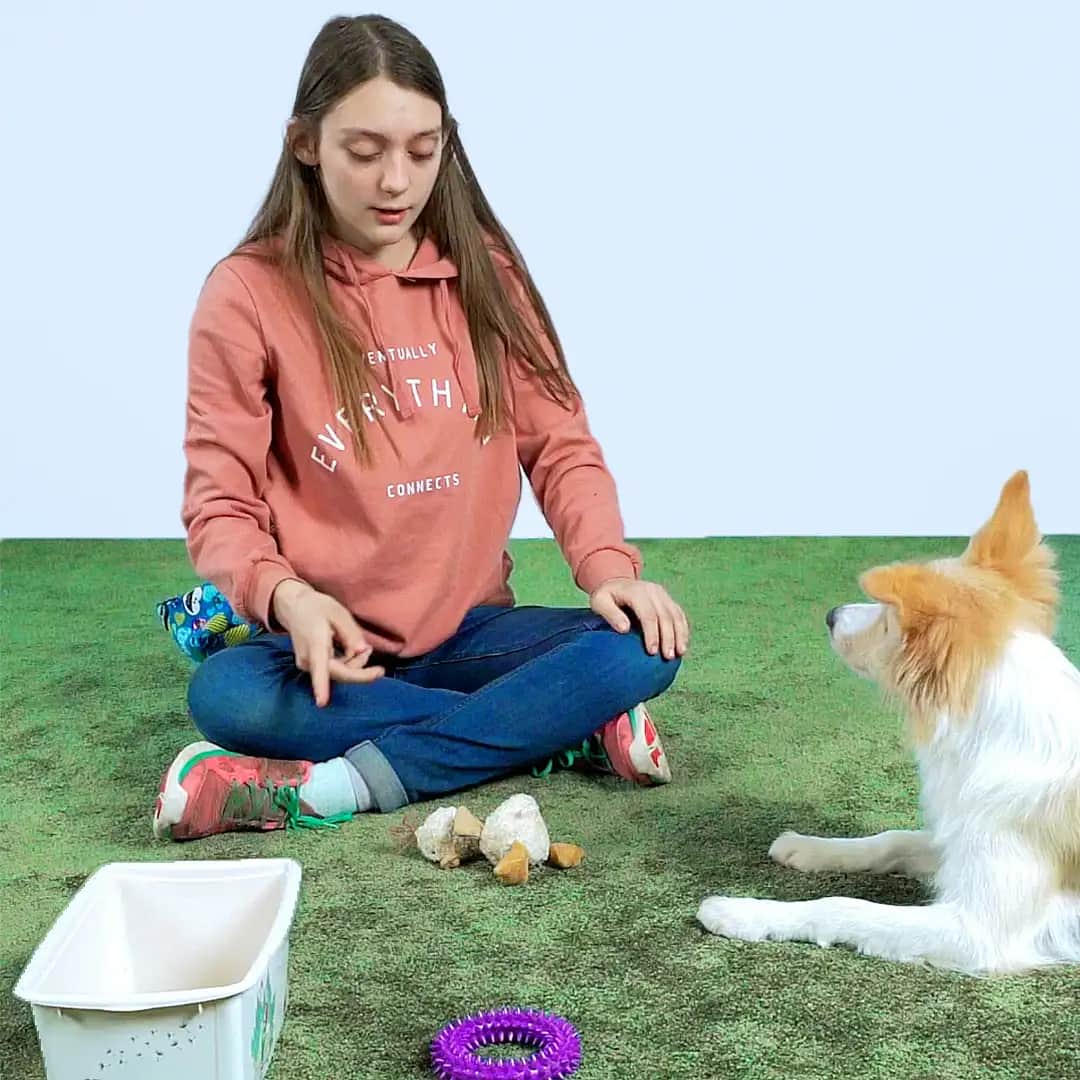

Key facts: Online dog schools offer virtual training with flexible content adapted to different needs and learning styles. They're more affordable than traditional dog schools but lack direct trainer contact and in-person socialization.
What Is an Online Dog School?
Thanks to an online dog school, classes and trainers come virtually to your home. You receive various training content on your laptop or phone. You're not tied to fixed times, you learn at your own pace.
How it works:
- Sign up and choose courses suited to your dog's level
- Work through structured learning modules at your own pace
- Access video tutorials, written guides, and practice plans
- Some platforms offer direct feedback from trainers
Advantages of Online Dog Training
Flexibility: Train at any time, from anywhere. No fixed appointment times, ideal for busy people and families.
Great for anxious dogs: Shy or anxious dogs don't need to get used to new environments first. You can start training immediately in a familiar setting.
Cost-effective: Online courses are generally significantly cheaper than in-person training. Group courses can cost €80-200; a good online program often costs a fraction of that.
Variety of learning materials: Videos, written guides, interactive elements, progress tracking, the best apps offer everything in one place.
Disadvantages of Online Dog Training
No direct trainer contact: This is the biggest drawback. Without someone watching, mistakes in your technique go uncorrected.
Requires self-motivation: The success of online training depends heavily on your own discipline and consistency.
Limited socialization: Dogs in traditional schools learn to behave around other dogs and people, something online training can't replicate.
Costs
Online training is significantly cheaper than in-person options:
| Format | Typical Cost |
|---|---|
| Single video/webinar | Free to €30 |
| Monthly subscription | €5 to €30/month |
| Complete online course | €50 to €300 |
| Annual app subscription | ~€80/year |
An annual app subscription often costs about the same as a single private lesson with an in-person trainer.
What to Look For in an Online Dog School
Video courses: Step-by-step video guides are far more effective than text alone. Look for trainers who demonstrate each technique clearly.
Mobile app: The best programs have an app so you can train anywhere, in the garden, at the park, even offline.
Qualified trainers: There's no regulation on who can call themselves a dog trainer online. Always check qualifications and certifications.
Comprehensive content: Look for courses covering basic commands, leash training, recall, socialization tips, and behavior problem solutions.
Online vs. Traditional Dog School
| Online | Traditional | |
|---|---|---|
| Flexibility | High | Low |
| Cost | Low | Medium-High |
| Trainer contact | Limited | Direct |
| Dog socialization | None | Good |
| Best for | Self-motivated owners, anxious dogs | Puppies, behavior problems |
Related Topics
Quick Quiz
Question 1 of 3What can online dog training NOT replace?
Conclusion
Online dog schools play an important role in modern dog training. They're convenient, flexible, and affordable, excellent for supplementing in-person training or for owners who can't access a traditional dog school.
They can't fully replace the direct, personal experience of a physical dog school, especially for socialization. But as a complement to in-person training, or for owners committed to consistent at-home practice, they're an excellent option.