
Roll over is a simple trick that most dogs learn in 1 to 2 weeks. Requirement: your dog has a solid "down." The trick works well as an entry point into trick training, because it consists of a few clear steps. Roll over is also the foundation for the trick "tuck in" (the dog rolls himself up in a blanket).
- Requirement: your dog can do "down"
- 4 steps: half-turn onto the back, full turn, add the verbal cue, shrink the hand signal
- Training sessions: 5 to 10 minutes, 2 to 3 times a day
- Never turn him with your hands (it scares the dog)
- If lying on the back is hard: spend more time on step 1, don't skip it
- Practice on a soft surface (carpet, lawn)
Roll over is a popular starter trick that builds body awareness and trust at the same time. It's built up from the down and can be trained in short sessions on a soft surface.
The 4 steps

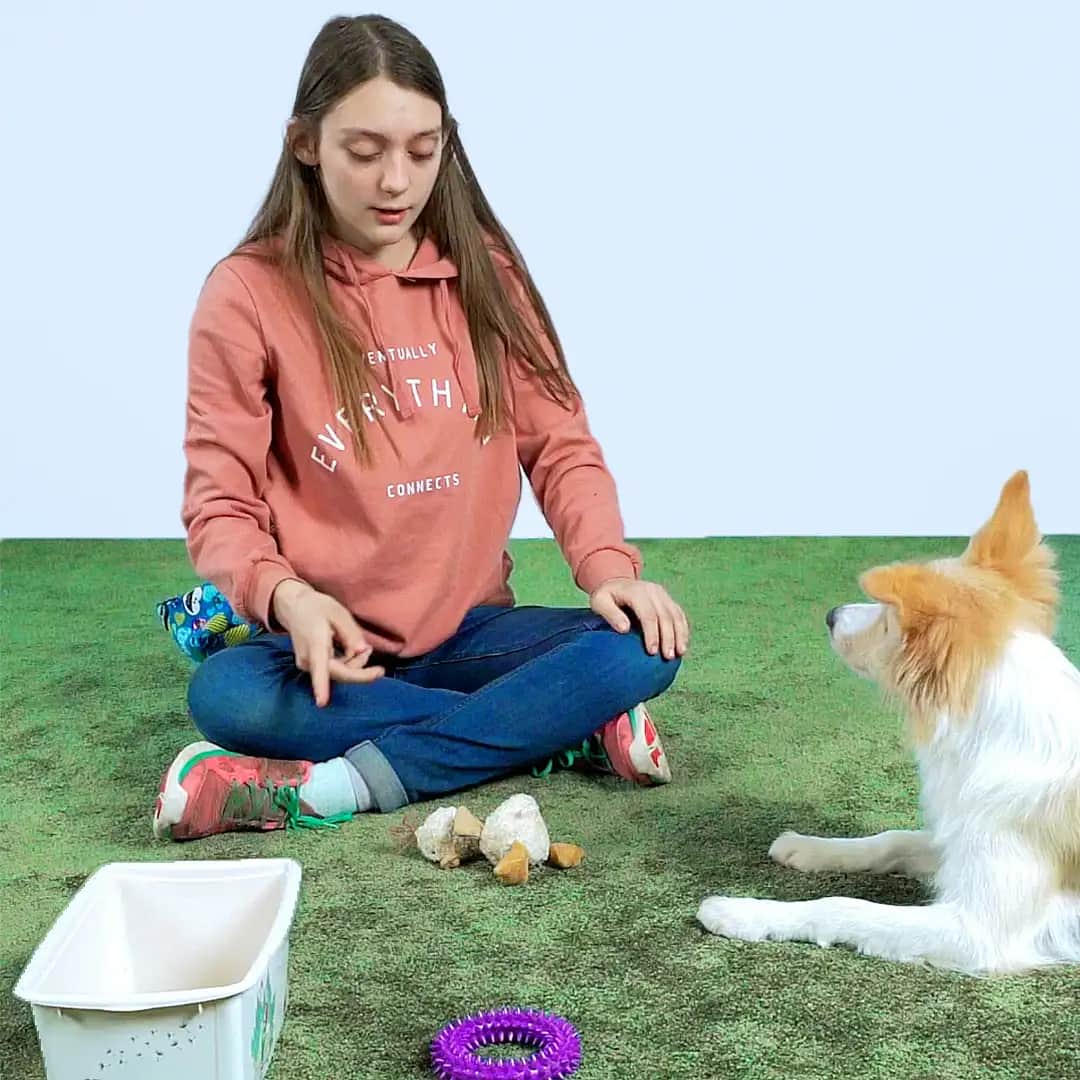
Step 1: Half-turn onto the back. Kneel down next to your dog and give the command "down". Hold a treat in front of his nose and slowly guide it in an arc over his shoulder. He follows the treat with his nose and turns onto his back. As soon as he's lying on his back: praise and give the treat. Repeat this step several times until he lies on his back relaxed.
Step 2: Full turn. Same as step 1, but keep guiding the treat until he rolls from his back onto the other side and ends up in the down again. Then practice making the movement smoother: guide the treat in a half-circle around the dog so that one continuous roll happens. Reward only once he's back in the down.
Step 3: Add the verbal cue. Repeat steps 1 and 2, but now lure with an empty hand (the treat comes out of your pocket only after the turn). Say "roll over" several times during the turn. Repeat the word when you reward, too. That way he links the movement to the verbal cue.
Step 4: Shrink the hand signal. Make the hand movement smaller with every repetition. From a full half-circle to a hinted-at circular motion all the way down to a short flick of the finger. The goal: your dog rolls over on the verbal cue "roll over" alone. Finally, increase the distance too (no longer kneeling right next to him, but standing a few steps away).
Your training plan
0/6When it doesn't work
The dog won't turn onto his back. This is the trickiest moment. Lying on the back makes many dogs uneasy because they give up control over their body. Fix: spend more time on step 1. At first, reward even the smallest movement toward the back. Don't get impatient, some dogs need several days just for this step.
The dog stands up instead of turning. The treat was guided too fast or too high. Stay slower and closer to the ground. Your hand has to stay close to his nose so he turns his head rather than lifting his whole body up.
The dog doesn't get the verbal cue. You switched from step 2 to step 3 too fast. Go back a step and practice again with the treat in your hand. The verbal cue has to be said many times at the same moment as the movement before the dog links the two. Clicker training can speed up the learning process, because the click marks the exact moment of the right movement.
Never turn him with your hands. As tempting as it is: physically pushing the dog onto his back is off-limits. He loses control over his body, which can trigger panic and damage trust.
Related topics
Were you paying attention?
Question 1 of 3What's the hardest part of roll over training?
The exercises in this article are an excerpt from the Hundeo course "Dog Tricks." At Hundeo Pro you'll find every lesson as a video guide with step-by-step build-up, plus training tracking and, when you run into problems, personal help from real trainers.