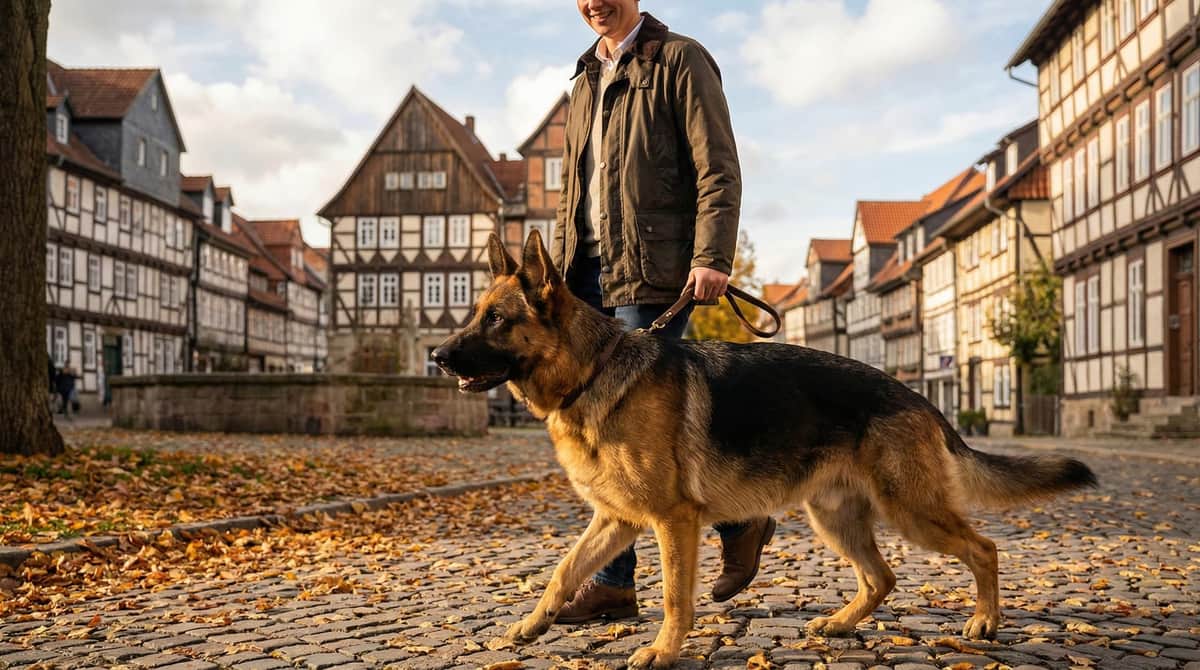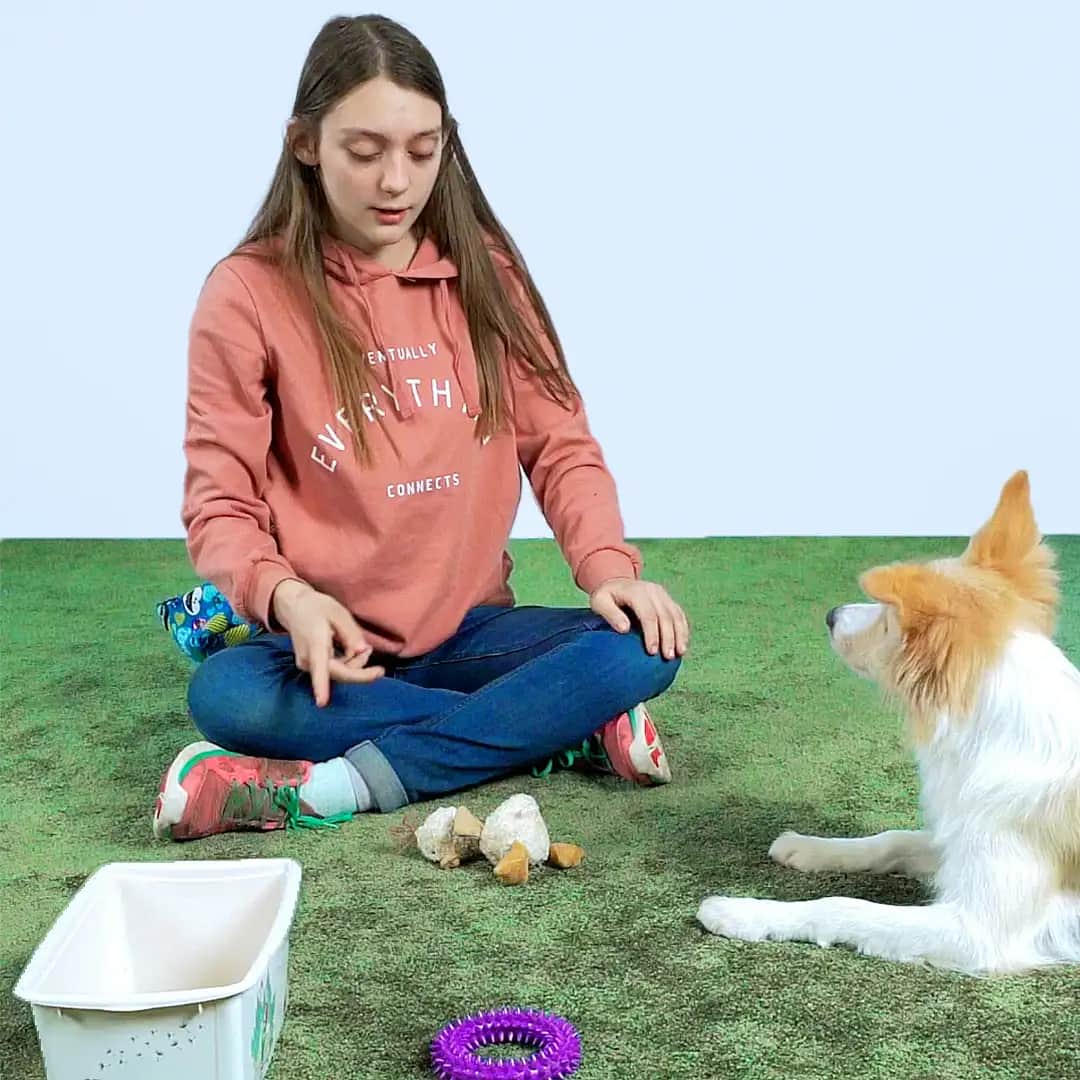

Puppies that refuse to walk are nothing unusual. In most cases it comes down to fear of the new surroundings, less often pain or unfavorable weather conditions. The solution is almost always the same: shorter distances, calmer routes, set times, and lots of patience. A puppy that sits down on its first walk and won't go on is showing normal behavior, not stubbornness.
- 3 most common reasons: fear/insecurity, reluctance/pain, temperature/weather
- Never tug on the leash or yell at the puppy
- Short walks (5-10 minutes) are better than long ones
- Set times create routine and a sense of security
- If you suspect pain: see your vet
- Puppies need up to 20 hours of sleep a day; tiredness is normal
1. Fear and Insecurity
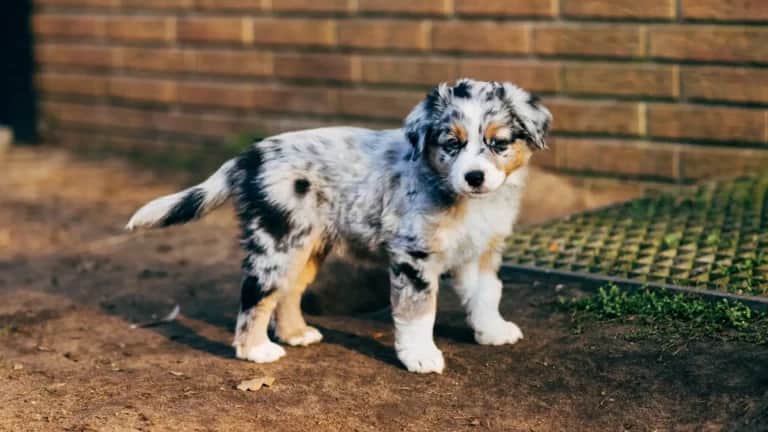
The most common reason. Everything is new: sounds (cars, sirens, other dogs), smells, people, surfaces. Puppies that came across few environmental stimuli during the socialization phase (8 to 16 weeks) are especially likely to feel overwhelmed outside. Good puppy training starts here.
Signs: The puppy stops and won't go on, flattens itself against the ground, pulls toward home, pants heavily, or has its tail tucked in.
Solution:
- Choose shorter distances. 5 minutes outside the front door is plenty at first.
- Use quiet times. Mornings or evenings, when there's less going on.
- Familiar surroundings first. The yard or a quiet side street before busy paths.
- Build a positive association. Every step outside is rewarded with a treat and praise.
- Carrying over short stretches is fine when the route to the quiet spot is too stressful. But as little as possible, so the puppy doesn't learn that being carried is the default solution.
2. No Interest or Pain
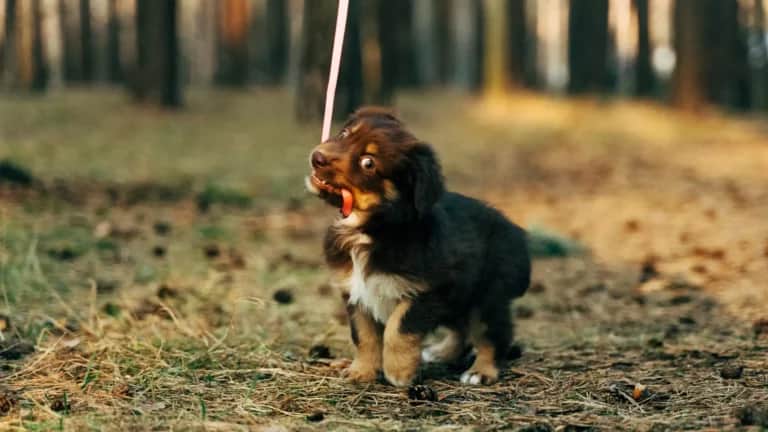
Puppies sleep up to 20 hours a day. If you wake your puppy or head out right after an active spell, he's simply tired. That's not a behavior problem, it's biology.
Signs of tiredness: The puppy yawns, lies down, moves slowly.
Signs of pain: The puppy limps, yelps when getting up, suddenly won't walk anymore (when it was fine before), or licks at a specific spot.
Solution for tiredness: Postpone the walk. Motivation is highest after sleeping and eating.
Solution if you suspect pain: See your vet. Joint problems, paw injuries, or infections can be the cause. Don't wait to see whether it gets better on its own.
3. Temperature and Weather
Extreme temperatures lower the desire to go for walks. In the heat: paws can burn on hot asphalt (rule of thumb: hold the back of your hand on the ground for 5 seconds; if it's too hot for you, it's too hot for the dog). Tips for cooling your dog down in the heat. In the cold: puppies without an undercoat get chilly fast.
Solution:
- In summer: go out in the morning before 9 a.m. and in the evening after 7 p.m. Choose shade and grass instead of asphalt.
- In winter: use midday (the warmest hour). Short outings, then warm up indoors afterward.
- In the rain: some puppies don't like rain. A raincoat helps with some dogs, while others simply get used to it.
Tips for Those First Walks
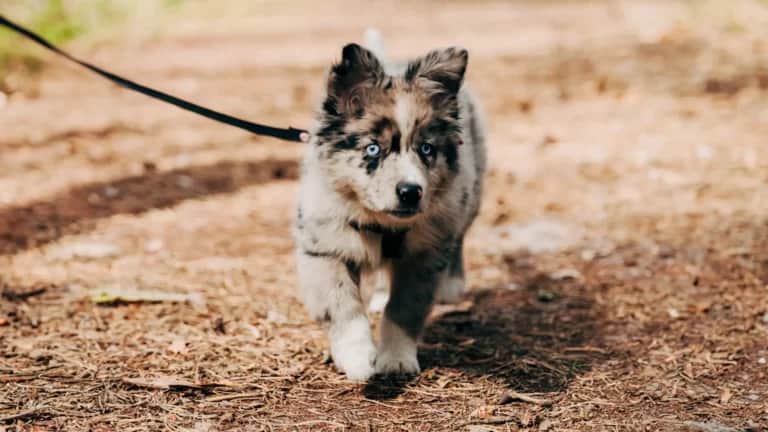
Set times. Puppies need routine. Go out at the same time every day. The puppy gets used to it and knows what's coming. That reduces insecurity.
When the puppy sits down and won't go on: Don't tug on the leash, don't scold, don't lure with treats (that rewards stopping). Just wait calmly. Most puppies start moving again on their own after 1 to 2 minutes, as long as you don't make a big drama out of it.
When the puppy can still see the house: Some puppies want to turn back as long as home is in sight. Carry him a few yards farther, until the house is out of view. Then set him down and continue walking normally.
Short distances. In the first few weeks, 5 to 10 minutes per walk is enough. Rule of thumb: 5 minutes of activity per month of age, twice a day. A 3-month-old puppy: 15 minutes per outing at most.
When Your Adult Dog Won't Go for Walks
With adult dogs that suddenly refuse to walk, two causes are worth considering:
Pain. Joint problems, paw injuries, gastrointestinal issues. Go to the vet and have it checked out.
A stressful experience on the last walk. The dog was attacked by another dog, got startled by a noise, or had an unpleasant encounter. Solution: walk the familiar, safe route. Show the dog that outside is safe. If the problem persists: bring in a trainer.
Your Training Plan
0/6Related Topics
Were you paying attention?
Question 1 of 3What's the most common reason puppies won't go for walks?
The exercises in this article are an excerpt from the Hundeo course "Puppy Training." With Hundeo Pro, you get all the lessons as video guides with a step-by-step setup, plus training tracking and, when problems come up, personal help from real trainers.