
Giving paw is one of the easiest tricks and a great entry into trick training. Most dogs pick it up within a few days. The only prerequisite is that your dog can sit. This trick trains focus, strengthens your bond, and serves as the foundation for further exercises like high five or crossed paws. As a bonus, your dog gets used to having its paws handled, which makes nail trimming much easier.
- Prerequisite: your dog knows sit
- 3 steps: treat in the fist, paw touches hand, introduce the cue
- Always use the same hand and the same cue word
- Train both paws separately (with different cues)
- Short sessions of 5 minutes, several times a day
- A clicker helps mark the exact right moment
Giving paw is one of the most popular dog tricks and a practical starting point: your dog learns to use its paws deliberately, which makes future nail care and tricks like high five much easier.
Training in 3 Steps

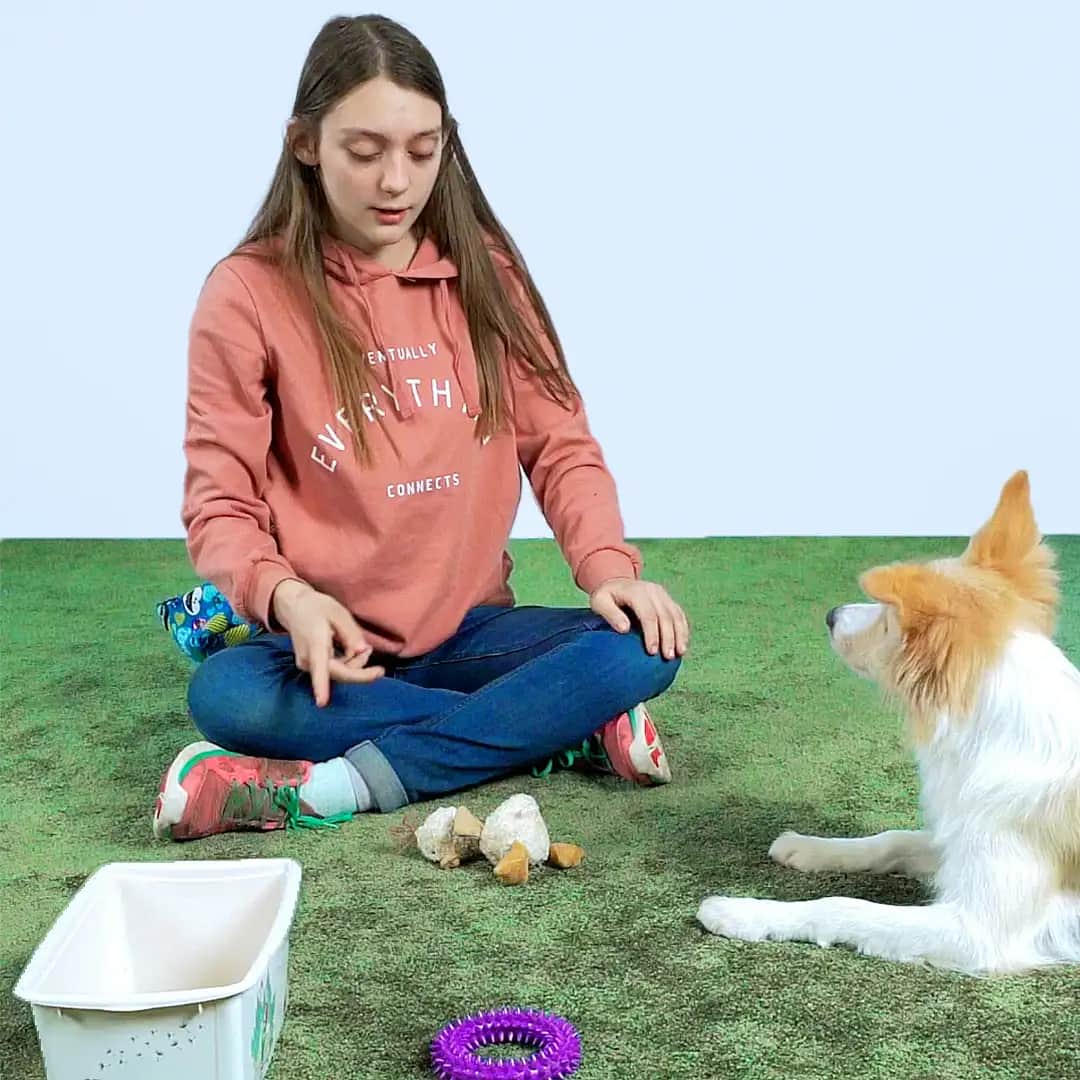
Step 1: Treat in the fist. Have your dog sit. Hide a treat in your closed fist and hold it in front of the dog's nose. The dog will sniff, nudge, and eventually tap your hand with its paw. At that exact moment: open your hand and release the treat. If you use a clicker, click the moment the paw touches and then reward. 10 to 15 repetitions per session.
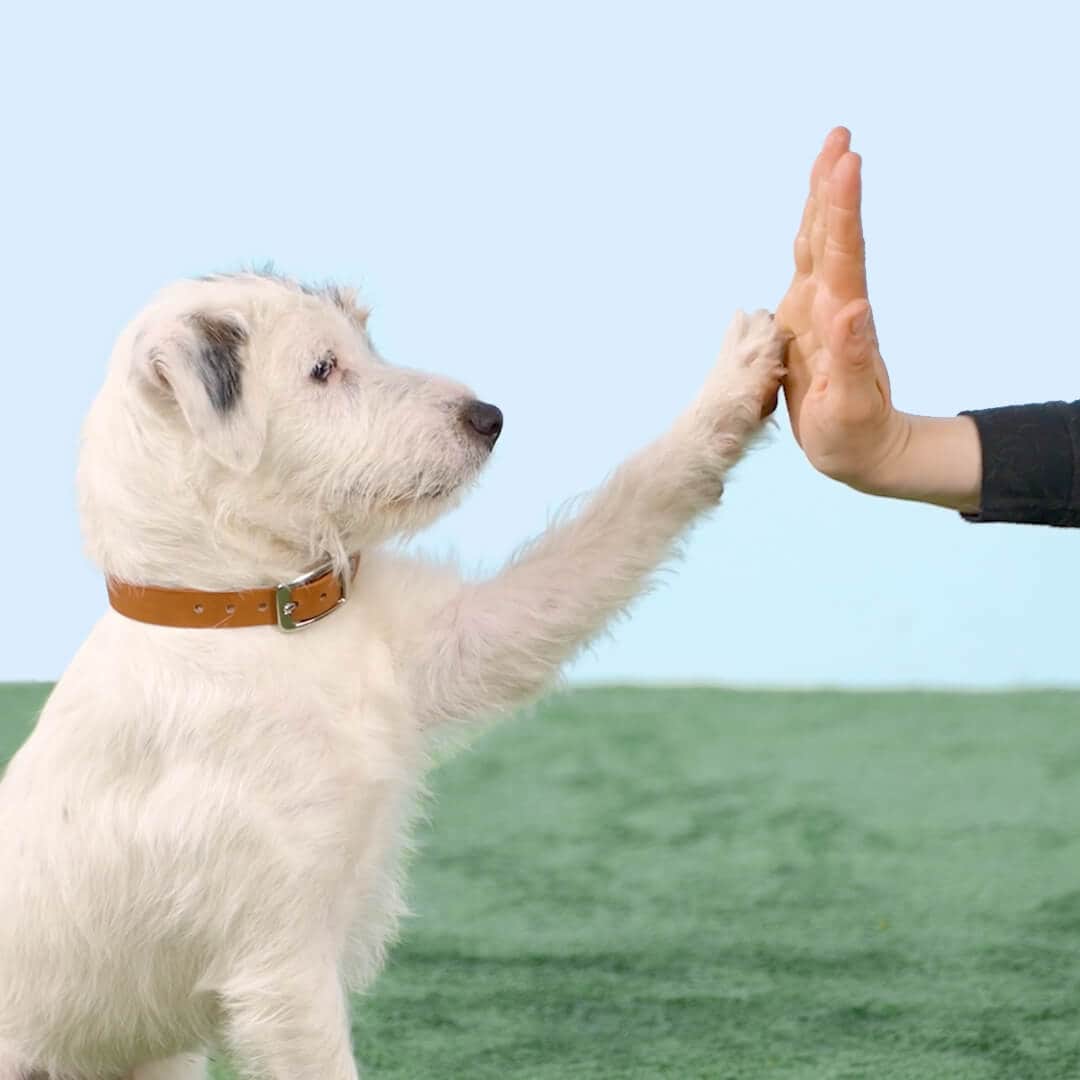
Step 2: Without treat in hand. Hold out your closed fist, but this time without a treat inside. When the dog taps with its paw, reward from the other hand. This teaches the dog that the hand gesture is the signal, not the smell of the treat. Once that works, hold your hand flat. The paw should land on your open palm. Gradually extend the duration: first one second, then two, then three.
Step 3: Introduce the cue. Only when the dog shows the movement reliably should you add the cue word: "Paw," "Shake," or "Give Paw." Always the same word, always the same hand. Once it works in one place, practice in other locations: in the garden, on walks, when guests visit. Dogs generalize poorly. What works in the living room needs to be reinforced in new environments.
Your Training Plan
0/6Common Problems
Dog won't lift its paw. Some dogs only nudge with their nose. Be patient. Most will start using their paw after a few attempts. If not: gently lift the paw, reward immediately, and repeat.
Paw gets pulled back right away. Reward faster. In the beginning, a brief touch is enough. Only increase duration later, once the dog understands what the exercise is about.
Dog offers the wrong paw. Only reward the desired paw. Angle your hand slightly toward the correct paw. Train both paws with separate cues, for example "Left" and "Right."
Dog gets too excited. Stay calm, speak more quietly, shorten the session. Only reward when the dog remains in sit. For dogs with poor impulse control, work on calmness first, then the trick.
Variations for Advanced Learners

Once paw is solid, you can build on it.
High five. Hold your hand higher so the dog slaps its paw against it instead of resting it. Your palm faces the dog.
Alternating left and right. Train both paws with different cues. Then ask for them in alternation. This builds focus and body awareness.
Paw on objects. Have the dog place its paw on a ball, a book, or a box. Useful as a stepping stone for more complex tricks like flipping a light switch or opening a drawer.
Related Topics
Did you pay attention?
Question 1 of 3When do you introduce the cue word 'paw'?
The exercises in this article are an excerpt from the Hundeo course "Basic Obedience." With Hundeo Pro you get all lessons as video tutorials with step-by-step progression, plus training tracking and personal help from real trainers if you run into problems.