Key Takeaways
- Positive reinforcement: Clicker training uses rewards to encourage good behavior and strengthens the bond between you and your dog.
- Clear communication: The clicker gives your dog instant acoustic feedback, making learning easier and cutting out confusion.
- Faster learning: Dogs pick up on what you want much more quickly with a clicker, leading to faster results.
- Versatile: Works for basic commands, tricks, and specialized tasks, great for dogs of every age and breed.
- Stress-free and fun: Builds your dog's problem-solving skills without any fear of punishment.
What Is Clicker Training?
Clicker training can take your dog's training to a whole new level! With a simple click, you tell your dog they did something right. This helps them catch on much faster and make quicker progress. Behavioral research in recent years has shown that animals learn better when they're rewarded for correct behavior. And it's not just that, clicker training is also a lot more fun than traditional training methods!
Whether it's basic obedience, tricks, or leash walking, clicker training works for every type of training.
Why Clicker Training Works
Clicker training is an effective and humane method for teaching your dog new behaviors or correcting unwanted ones. Here's why you should give it a try:
- Positive reinforcement: Clicker training is built on the principle of positive reinforcement. You use rewards, treats, praise, or playtime, to encourage the behavior you want instead of punishing what you don't. This builds a positive relationship between you and your dog.
- Clear communication: The clicker gives your dog clear, consistent feedback the instant they show the right behavior. This eliminates confusion and makes it easy for your dog to understand exactly what earned them a reward.
- Faster learning: Because the clicker gives your dog immediate feedback, they learn faster and pick up new commands more quickly.
- Encourages creative thinking: Clicker training helps develop your dog's problem-solving skills. It encourages your dog to think independently and try different behaviors to earn a reward.
- Flexibility: You can use clicker training for all kinds of commands and behaviors, from simple ones like "sit" or "stay" to more complex tricks.
- Bonding: Clicker training strengthens the bond and understanding between you and your dog. It becomes an enjoyable, rewarding activity for both of you.
Keep in mind that, like any training method, clicker training takes patience and consistency. Some dogs may need a little extra time to get the hang of it, but with practice, most dogs thrive with this approach.
The best way to teach your dog something is through rewards. It's no secret that most dog owners already train this way. Dogs learn fast when they notice that a certain behavior earns them a reward. They'll repeat that behavior again and again, hoping for more.
Why rewards work:
- A positive bond: Rewards help build a positive bond between you and your dog. Your dog will see training as an exciting, enjoyable time.
- Encourage the right behavior: Rewards show your dog exactly which behavior you're looking for.
- Reduce fear and stress: Punishment can cause fear and stress in your dog, which can actually lead to behavioral problems. Rewards create a relaxed, positive learning environment instead.
- Faster, more effective learning: Dogs trained with rewards generally learn faster and retain what they've learned better. They're also more motivated to pick up new things.
- A stronger relationship: Rewards turn training into a shared activity that strengthens your relationship. Punishment, on the other hand, can damage it.
- Build trust: Rewards help build trust between you and your dog, while punishment can undermine it. The clicker makes a clicking sound that tells your dog: "Good job!" After the click, there's a reward. That could be a treat, a favorite toy, some petting, or verbal praise.
The reward should be something your dog truly loves. And it's important that the reward comes right after the click so your dog knows they did something right.
You can find the video with our dog trainer Christin further below.
Timing Is Everything
For clicker training to work, timing is key. You need to click and reward right after the desired behavior so your dog knows exactly what they just did right. The faster the reward comes, the more reliably your dog learns. With traditional training, it's tough to praise at exactly the right moment.
For example, if you want your dog to walk beside you off-leash, you need to praise them the instant they're next to you. But by the time you hand them a treat, too much time may have already passed. With clicker training, it's much easier to capture the right moment and train your dog quickly and effectively.
The Clicker
A clicker is a small device that makes a distinct clicking sound at the push of a button. It lets you mark the exact moment your dog does something right. The sound is loud enough for your dog to hear clearly and stands out from everyday background noise.
When your dog shows the behavior you want, simply press the clicker and give them a reward. Your dog will start associating the click with the reward and understand exactly what they're being rewarded for. Over time, the conditioning effect means the clicker alone has almost the same impact as a treat.
You don't have to use a traditional clicker, a whistle or a specific word can work as a signal too. Just make sure you don't use that signal in everyday life so it keeps its special meaning.
Your dog needs to connect the reward with their behavior. The click makes that connection faster and more precise. They can pinpoint exactly when they did something right, so what they've learned sticks more effectively.
This method also builds your dog's problem-solving skills and creativity. Your dog will actively look for new ways to trigger that clicking sound again. They learn that they can figure out on their own how to earn the reward. This realization helps them learn more flexibly and quickly in other situations too.
Some exercises are nearly impossible to teach with traditional methods. But with a clicker and a little patience, even the most complicated tricks are within reach. That's why clickers are also used to train police dogs and in medical training for zoo animals, helping them cooperate during veterinary exams.
Young or old, big or small, clicker training works for every dog! Even dogs that are generally considered harder to train can benefit from this method. Whether your dog already has some gray on their muzzle or is still a little puppy, clicker training delivers results. Older dogs can still learn new tricks, and young puppies can sharpen their skills.
Clicker training is built on rewards, and that's a huge advantage! Your dog will make much faster progress because they don't have to worry about making mistakes. In fact, they'll feel free to get creative and try new things. And since it requires no physical contact, even shy or anxious dogs can be trained without pressure or fear. That builds trust between you and your dog.
Here's what really sets clicker training apart: it's incredibly fun! Your dog will love training with you and figuring out how to earn treats through the click. That's a powerful motivator for them to keep improving.
It's also a wonderful way to strengthen your bond and spend quality time together. The exercises feel more like a game than a chore and always bring variety. That means it never gets boring, and your dog stays motivated to keep going.
Does Clicker Training Have Any Downsides?
Like any training method, clicker training has a few potential drawbacks depending on the dog and trainer. The good news? With a little preparation, you can minimize or completely avoid them. Some dogs may find the loud clicking sound unpleasant or even startling. If that's the case, try a muffled clicker or one with adjustable volume.
Another downside is that you need to carry the clicker with you. An easy fix: attach it to your keychain or belt loop so it's always handy when you're out with your dog. Timing matters a lot in clicker training, you need to associate the click with the right behavior. It might take a little practice to nail the timing. But don't worry, you'll get the hang of it soon!
Common Problems + Solutions
Even though clicker training has tons of advantages, a few issues can come up during training:
Bad timing: You need to click the instant your dog shows the right behavior. If you click too early or too late, your dog can get confused and learn the wrong thing.
Over-reliance on treats: Some dogs can become dependent on treats and only respond to commands when they know a treat is coming.
Overtraining: Just like people, dogs can get overwhelmed or stressed from too much training. Keep sessions varied and take breaks.
Rushing progress: Sometimes we expect dogs to pick up every command right away. That leads to frustration. Every dog is different and learns at their own pace.
Inconsistency: Consistency is essential in clicker training. Always click when the desired behavior happens, and always follow it with a reward.
Remember: every problem has a solution. With patience, understanding, and consistency, you and your dog will have a blast with clicker training.
5 Tips and Tricks
Interested in clicker training? Looking for ways to level up your exercises?
Here are some tips to make your training even more effective:
1. Get Your Dog Used to the Clicker First
Your dog hears the clicking sound for the first time and seems confused? That's totally normal, they can't connect the sound with a reward yet. Even during the first few sessions, they won't know exactly what's expected.
That's why it's important to introduce the clicker before actual training so your dog already links the sound with a reward. You can also use the clicker outside of training sessions and immediately reward your dog afterward. They'll quickly learn that the sound means good things are coming.
2. Click Often in Quick Succession
If you want your dog to learn an exercise quickly, frequent rewards help. If they only get rewarded occasionally for a certain behavior, they won't make the connection as easily. You can click up to 15 times per minute when practicing something new.
Just make sure the overall session doesn't run too long. Your dog needs to be able to focus.
3. Reward With Every Click
Every click is a promise to your dog. If you click without following through with a reward, they'll be disappointed. Over time, the click would lose its power, and clicker training would stop working.
That's why you need to keep your promise with every single click and reward your dog.
4. Start With Simple Exercises
Want to teach your dog new tricks? Start slow.
Remember that your dog, just like you, needs time to get used to this new training method. Begin with simple exercises and gradually work your way up.
At the end of this chapter, you'll find some beginner exercises to help you get started.
5. Don't Correct Your Dog
In clicker training, your role is passive, you simply react to your dog's behavior. If they do something right, you click. If they don't, they just don't get a reward. You don't need to show your dog what to do. Let them figure it out on their own. This way, they'll eagerly anticipate the next click and reward, and they'll get more creative over time.
Through lots of repetition, they learn what to do. This sparks their creativity and makes training fun for both of you!
If you're new to clicker training, start slow with simple exercises. It's going to be a lot of fun. These exercises are just meant as inspiration. Feel free to modify them or come up with your own ideas to keep training fresh.
This exercise works best with a partner. One person operates the clicker while the other holds their hands out in front of the dog. One hand has a treat, the other is empty. Both hands are closed into fists so the dog can't see which one holds the food. The goal is for your dog to touch the empty hand with their nose to earn the treat from the other hand. It might sound tricky, but with the clicker, they'll figure it out fast.
Every time your dog briefly looks away from the hand with the treat, click and reward. In the next round, only reward them when they look toward the empty hand, and then when they move toward it. You'll be amazed how quickly your dog realizes they need to move away from the food hand to get the treat. This exercise is fun for both of you and builds your dog's focus and concentration.
In target training, the goal is for your dog to touch a specific spot on a long object, the target, with their nose. You can use a pointer stick, a regular stick, or even a fly swatter. The important thing is that the tip looks different from the rest, whether in color or shape. To introduce targeting, start by rewarding your dog just for showing interest in the stick. Over time, only click when they move toward the tip. Finally, only reward them when they actually touch it.
Once your dog masters targeting, you can use it for leash walking, tricks, and more. Try switching up the object you use as a target stick, it keeps things interesting and your dog motivated. Once you and your dog have gotten comfortable with clicker exercises, let your creativity run wild and take on new challenges. Here are a few ideas:
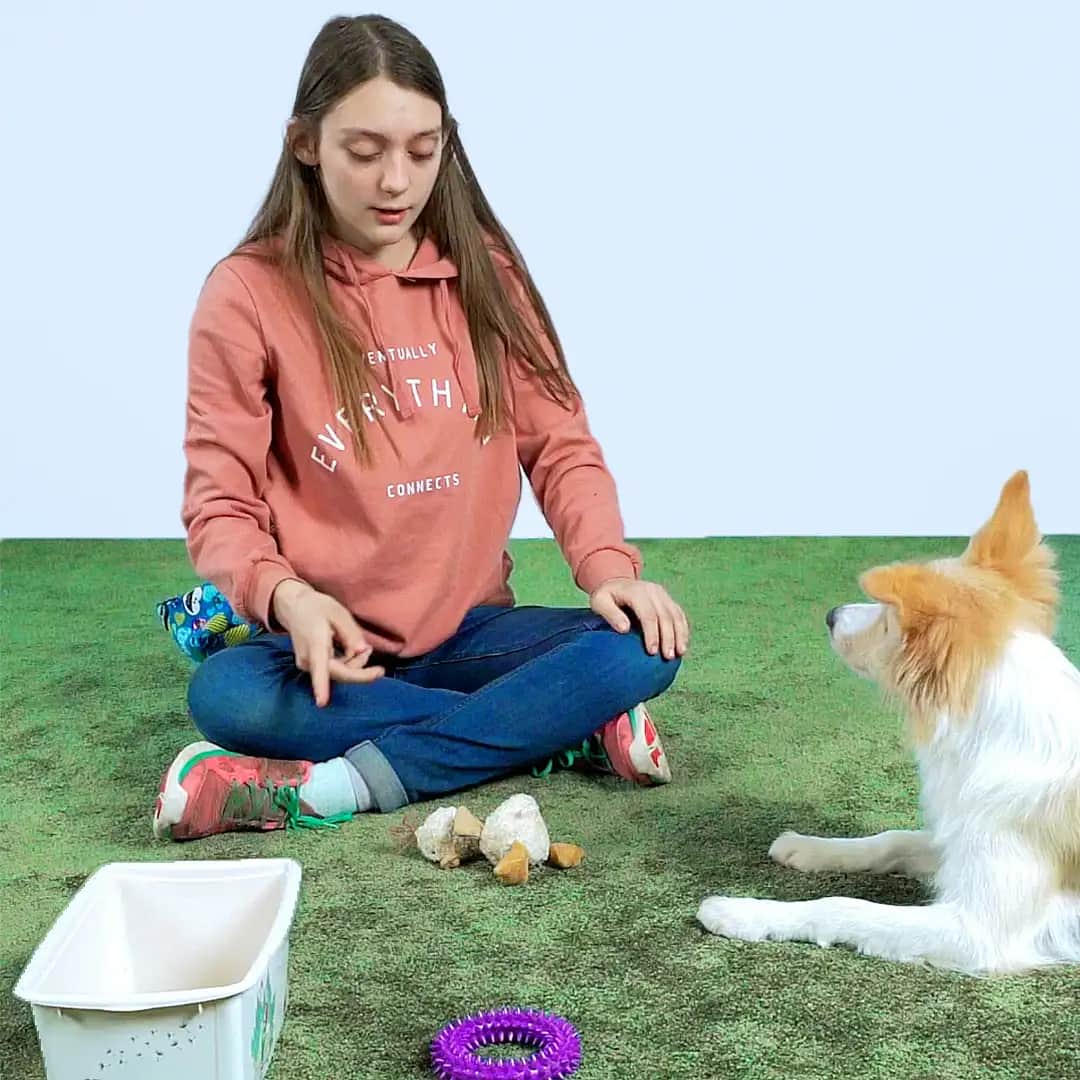
How about teaching your dog to push, nudge, or fetch objects? They can also learn to place objects in boxes, or sit in one themselves. Creative toys can become puzzles that spark your dog's curiosity. They don't have to be typical dog toys either. Kids' toys work great too.
Skateboarding is a popular one, though not every dog is built for it. Small dogs can learn if they're not scared of it. Parkour is great for all dogs since it's all about conquering different obstacles.
What Is a Clicker?
A clicker is a small, handy device that makes a distinct clicking sound when pressed. This sound is used to train dogs and other animals by pairing it with a positive reward.
What Are the Benefits of Clicker Training?
With clicker training, you can instantly tell your dog they've done the right thing, no physical contact needed. Dogs catch on very quickly to what earns them a click. That means faster learning, and even anxious dogs can be trained more easily. Clicker training lets you work gently and effectively with your dog.
Which Dogs Is Clicker Training Good For?
Clicker training works for dogs of every age and breed. Puppy or senior, it doesn't matter. You can see quick results with clicker training.
How Do I Use the Clicker?
To successfully train your dog with a clicker, start by getting them used to the sound. Give them a treat every time you click. Once your dog connects the sound with a reward, you can begin the real training. Always click when your dog shows the behavior you want. This way, they'll quickly understand what's expected and stay motivated to keep learning.
Where Can I Buy a Clicker?
You can find dog clickers at just about any pet store and online. A clicker typically costs less than $5. There's not much to overthink when buying one, most clickers do the job just fine.
Conclusion
Clicker training is a fantastic way to improve and expand your dog's training. It works for basic obedience, leash walking, and learning tricks. With clicker training, the sky's the limit for both your creativity and your dog's. This playful approach to training strengthens your bond with your dog and helps shy or anxious dogs come out of their shell. Clicker training is incredibly fun! Before you start the actual training, get your dog used to the clicker first. Always click at the right moment and reward your dog immediately. Once you've both gotten comfortable with the clicker, you can move on to new exercises and gradually increase the difficulty.