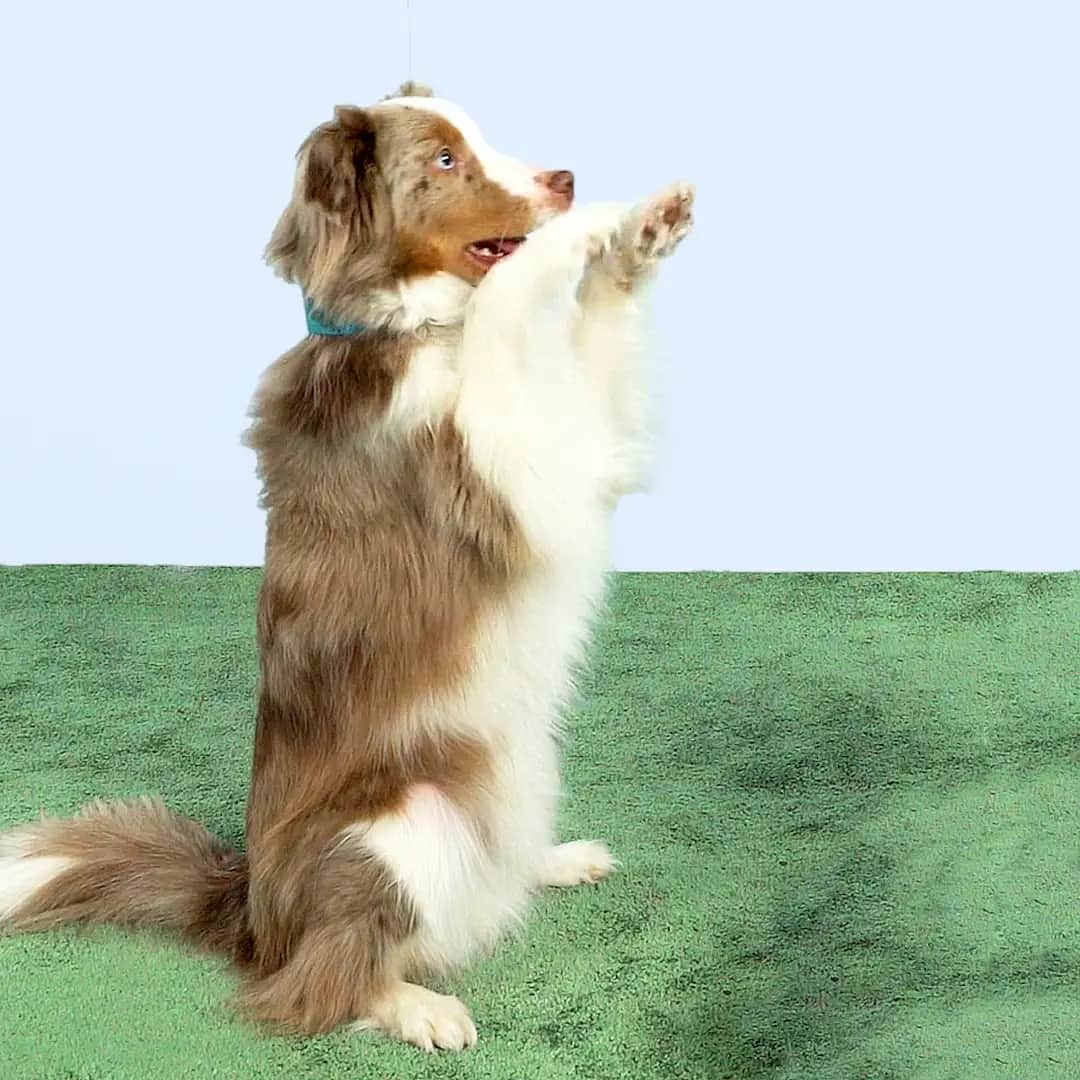
Beg is one of the most popular dog tricks and looks funny on every dog. The exercise requires balance and core strength. Your dog must have a reliable sit first, because the upright position is always built from the sit.
- Advanced trick; a reliable sit is the prerequisite
- Slowly guide a treat upward over the nose; the dog lifts its front paws
- Reward small lifts at first, then gradually shape the full position
- Not suitable for all dogs: skip heavy breeds and dogs with back problems
- Only train from 12 months of age (large breeds: 15 to 18 months)
- Introduce the verbal cue only when the position works 9 out of 10 times
This trick trains your dog's core muscles and balance. Small and medium-sized breeds often learn it faster because their center of gravity is lower. In the Hundeo app, the trick is called "Beg" and belongs to the "Advanced" category.
- Dogs with back problems, hip dysplasia, or joint damage: do not train this trick
- Heavy breeds (Great Dane, Saint Bernard, Newfoundland): the strain on the spine is too high
- Puppies and young dogs under 12 months: bones and joints are not yet fully developed
- When in doubt: ask your vet before starting the training
The 4 Steps
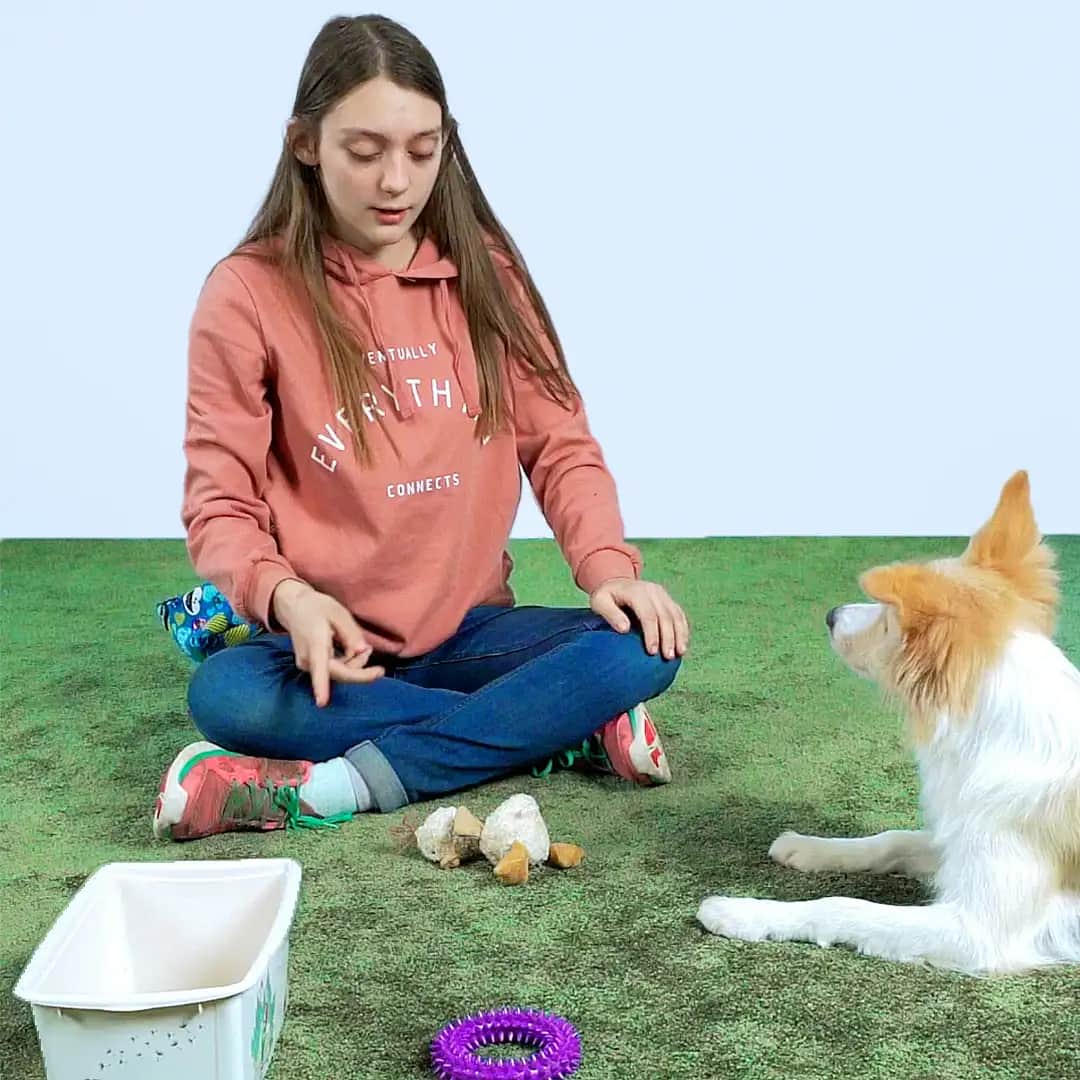
Step 1: Lure from the sit. Have your dog sit. Hold a treat just above their nose and slowly guide it straight up. Not backward, but straight up. Your dog lifts their front paws slightly off the ground to follow the treat. Mark and reward immediately. At this stage, it's enough if they only lift their paws a few centimeters. You shape the movement bit by bit.
Step 2: Shape the upright position. Over several sessions, gradually hold the treat higher. Reward each time your dog reaches a little higher than the last attempt. Goal: they sit upright freely, both front paws in the air, back straight. If you hold the treat too high, they will jump up. That means you moved too fast. Go back one step and start lower. Tip: practice in front of a wall or in a corner at first. Your dog can lean against it and find their balance more easily.
Step 3: Introduce the verbal cue. When the upright position works in 9 out of 10 attempts, introduce the word "beg." Say the cue, show the hand signal (hand moving from low to high), mark and reward. After a few rounds: empty hand, just the gesture. Then test the word alone. If your dog doesn't respond, go back to word plus gesture.
Step 4: Extend the duration. At first, you reward immediately when your dog hits the position. Now wait 1 second, then 2, then 3 to 5 seconds. Only then mark. Use a release cue like "OK" or "done" so your dog knows when they can put their paws down again. Increase the hold time gradually, not jumping from 1 to 10 seconds.
Your Training Plan
0/6Common Mistakes
Holding the treat too high. If you guide the treat too far above the head, your dog jumps up instead of holding their balance. The treat should stay just above head height, just enough that they need to lift their paws.
Progressing too fast. Some dog owners want to see the full position right away. Reward every small paw lift at the beginning. Your dog needs time to build the muscles and balance.
Training from a standing position. Beg only works from a sit. If your dog is standing, they will try to jump. Always ask for a sit first, then guide the treat upward.
Sessions that are too long. This trick is physically demanding. Maximum 5 repetitions per session, 2 to 3 sessions per day. Leave breaks between sessions.
Which Dogs Is This Trick Suitable For?
Light and medium-sized breeds with a low center of gravity are well suited: Poodles, Dachshunds, Cocker Spaniels, Beagles, most Terriers. Many mixed breeds also learn the trick without problems.
Heavy, large breeds are less suitable. With a Saint Bernard or Great Dane, too much weight rests on the lumbar spine. The same applies to dogs with long backs and short legs if they already have back problems.
If your dog limps after training, seems stiff, or shows signs of pain: stop the trick and see your vet.
Related Topics
Did You Pay Attention?
Question 1 of 3Which command must your dog know before you train beg?
In our dog tricks overview, you'll find all tricks sorted by difficulty.
The exercises in this article are an excerpt from the Hundeo course "Dog Tricks." With Hundeo Pro, you get beg as a video tutorial with step-by-step instructions, plus training tracking and personal help from real trainers if you run into problems.