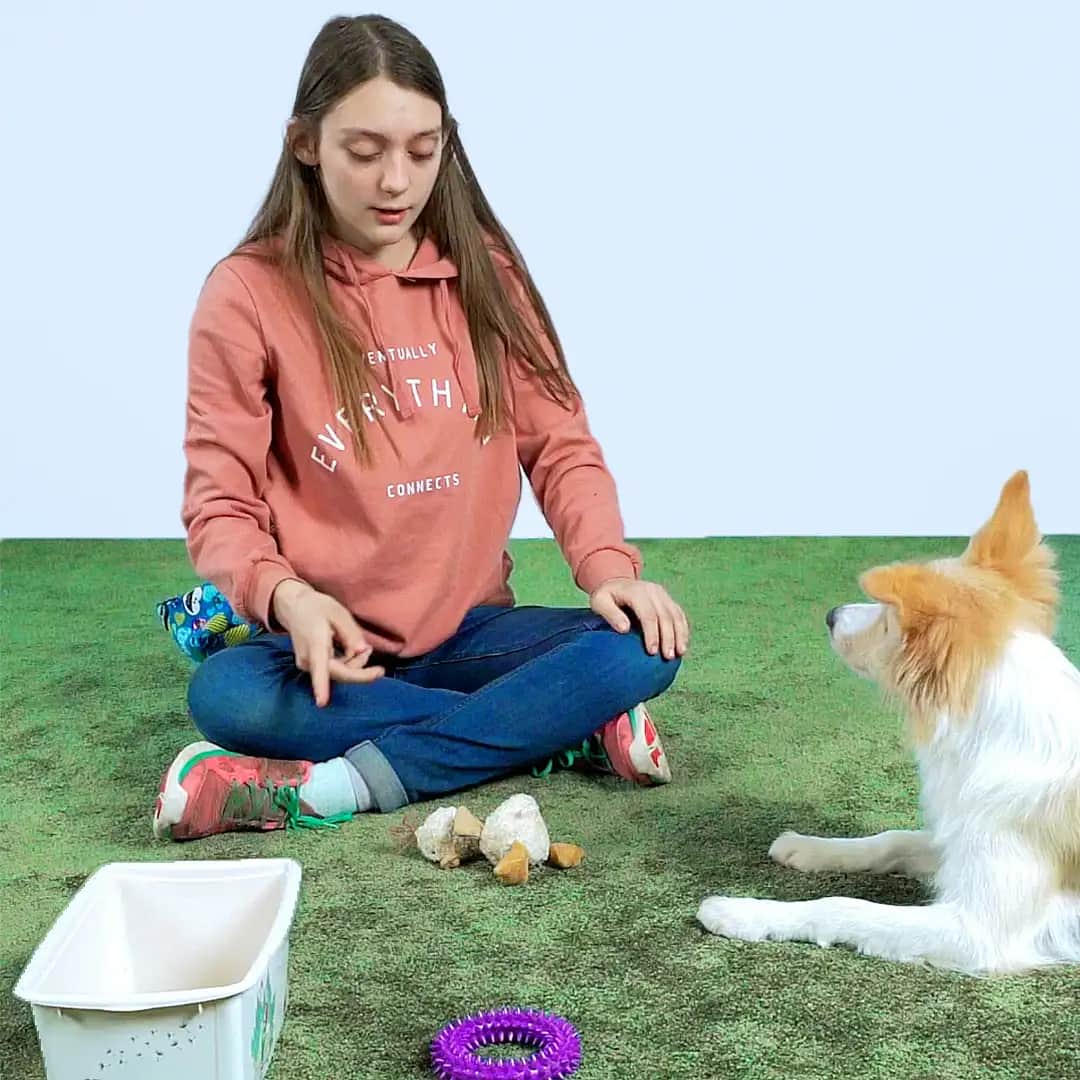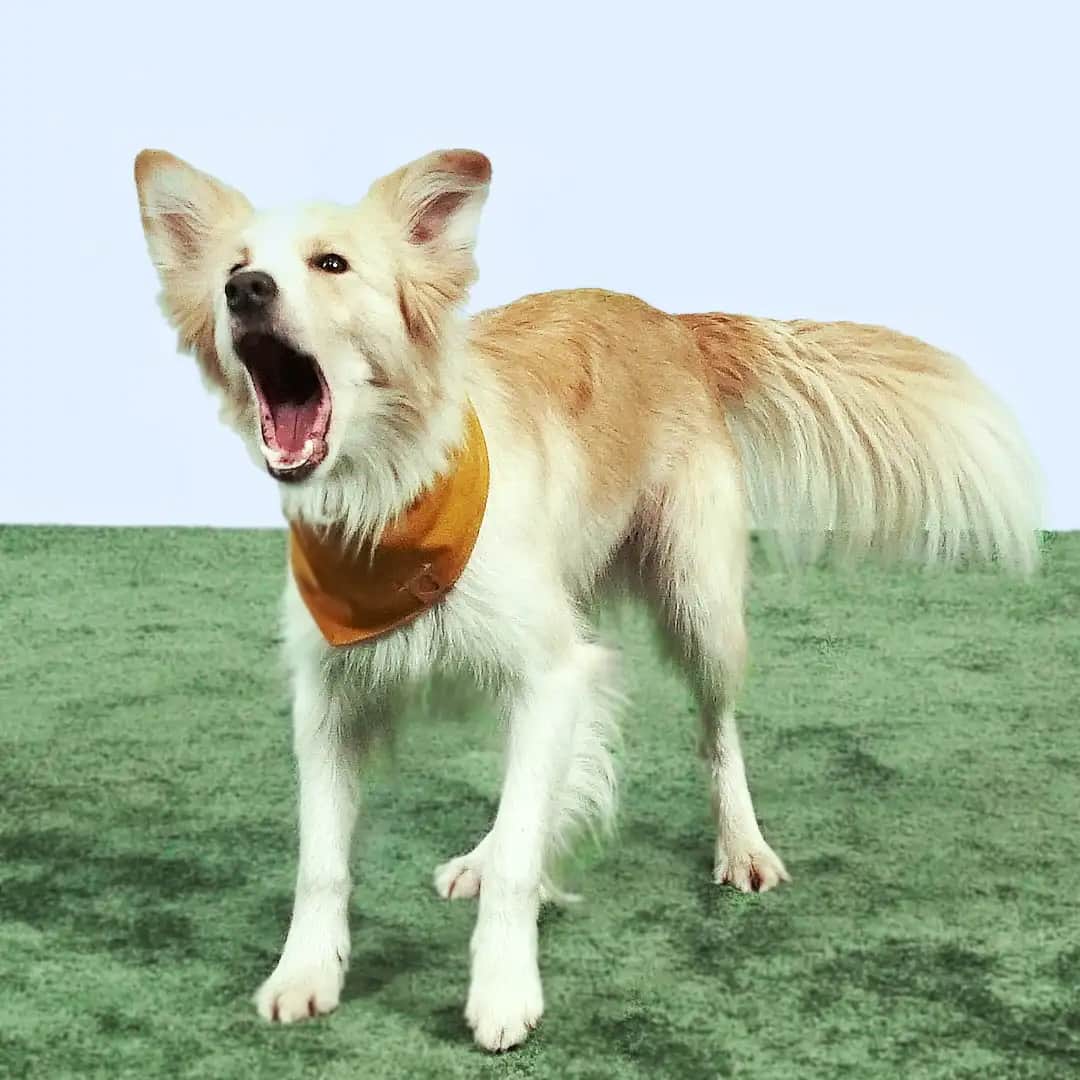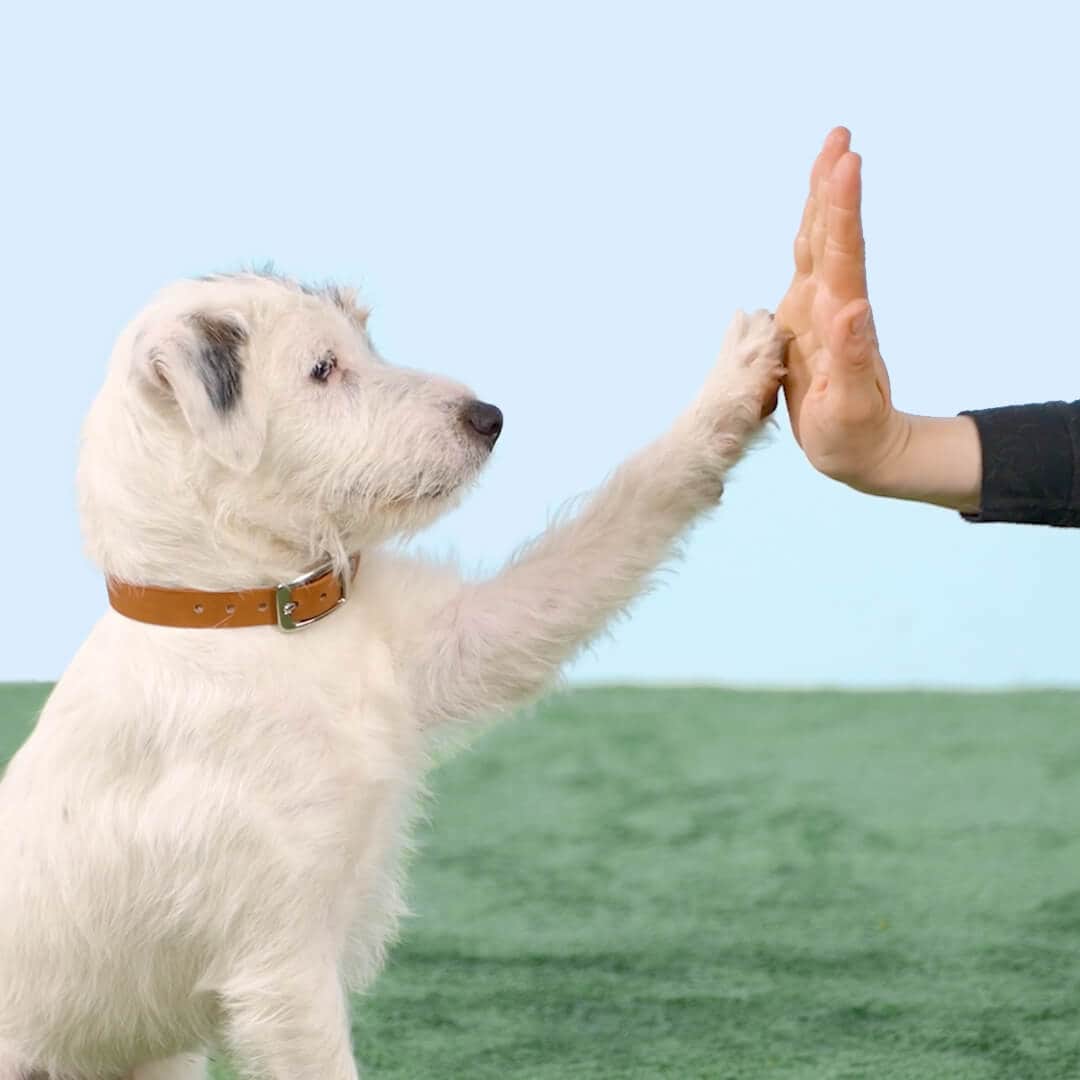
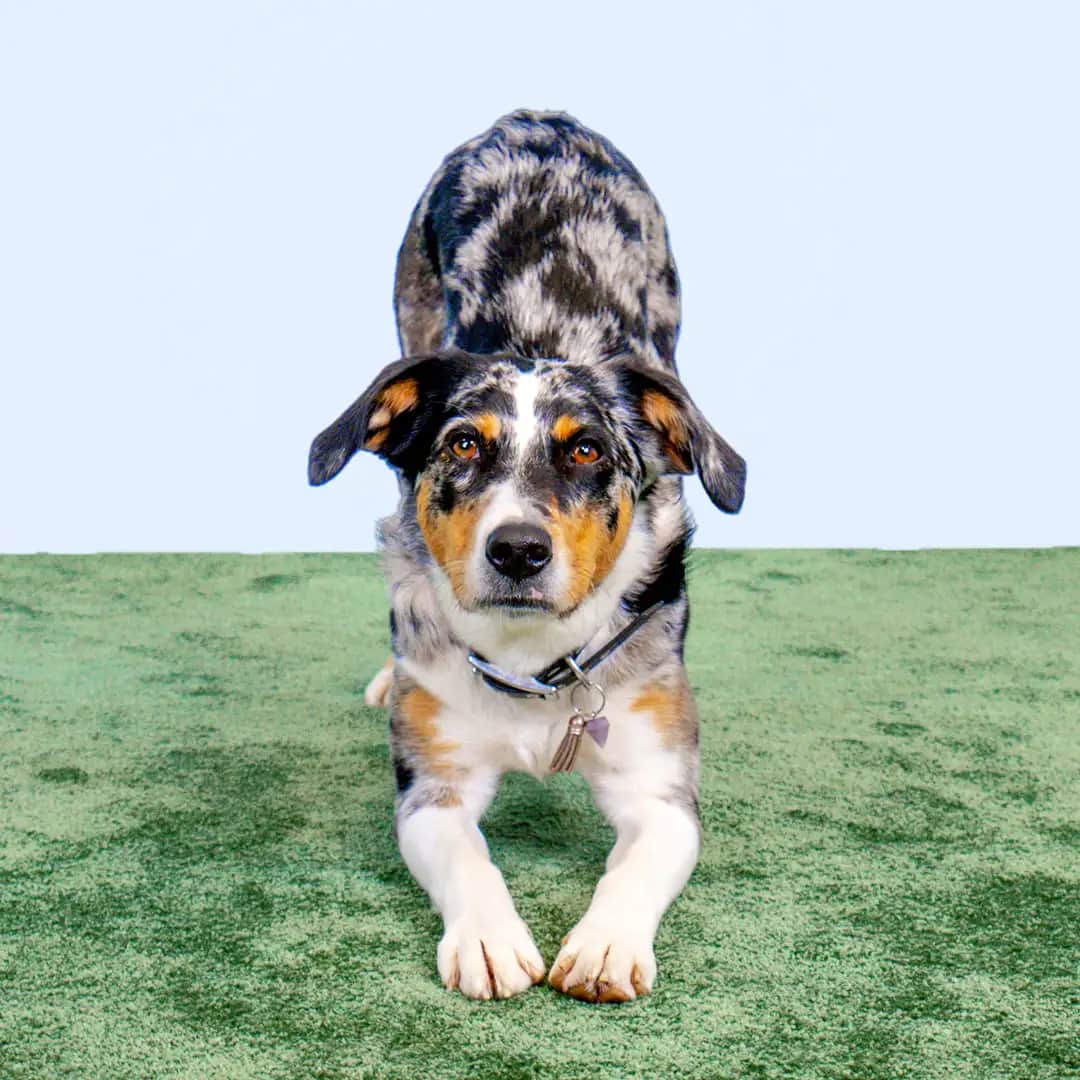
In the bow, your dog lowers the front body while the rear end stays up. The position looks like a play bow and is a popular trick that goes over well with an audience. Prerequisite: your dog knows Down and Stand.
- Front body lowers, rear stays up (play bow position)
- Guide a treat from the nose slowly between the front legs downward
- Prerequisites: Down and Stand must be solid
- Most common mistake: guiding the treat too low, dog lies down completely
- Trick name in the Hundeo app: "Bow (Take a Bow)"
The bow is a trick of moderate difficulty. Dogs also show this movement in natural communication: the play bow looks exactly like this. Some dogs offer it on their own, while others need deliberate shaping.
The 3 Steps
Step 1: Lure beneath the chest. Your dog stands. Hold a treat in front of the nose and guide it slowly between the front legs downward, toward the chest. Your dog follows the treat with his nose and lowers the front body. The rear stays up because you don't go all the way to the ground. The moment the elbows touch the ground, mark and give the treat.
If your dog lies down completely, you guided the treat too low or too far back. Keep it just below the chest. Alternatively, you can gently hold your arm under the belly to keep the rear end up. Phase out this support after 5 to 10 repetitions.
Step 2: Introduce the hand signal. After several successful repetitions, perform the same motion with an empty hand. Palm facing down, movement toward the ground. The dog knows the pattern and performs the bow. The reward comes from the other hand. When the exercise works 9 out of 10 times, introduce the verbal cue: say "Bow" or "Take a Bow", show the gesture, mark, reward.
Step 3: Increase duration and distraction. At the start, a brief lowering is enough. Now gradually extend the position: hold for 1 second, then 2, then 3. Always mark while your dog is still in the bow, not when he stands back up. This teaches him that staying in position pays off. When the bow is stable at home, practice in different locations.
Using the Natural Play Bow
Some dogs bow regularly when inviting play. If your dog does this on his own, you can deliberately capture this moment: as soon as he goes into the bow, mark and reward. After a few repetitions, he understands that the movement pays off and offers it more often. Then introduce the verbal cue.
This method (capturing) works with dogs that show the play bow regularly. For dogs that rarely do it, luring is the faster route.
Common Mistakes
Guiding the treat too low. The classic mistake: you guide the treat all the way to the ground and the dog lies down instead of bowing. The treat stays just below the chest. Go too little rather than too far down.
Asking for duration too soon. At the start, a brief lowering is enough. If you immediately demand 5 seconds, your dog gets unsure and breaks the position. Increase duration in 1-second increments.
Starting without prerequisites. Your dog needs to be able to stand reliably without sitting down. If Stand isn't solid yet, the bow becomes difficult because the dog goes straight from standing into a Down. First solidify the basic commands.
Your Training Plan
0/7Tricks and Commands
Did you pay attention?
Question 1 of 3Where do you guide the treat so your dog bows?
In our dog tricks overview, you'll find all tricks sorted by difficulty.
The bow is part of the Hundeo course "Tricks for Advanced Dogs". With Hundeo Pro, you'll find this trick as a video tutorial with training tracking and personal help from real trainers if you run into problems.