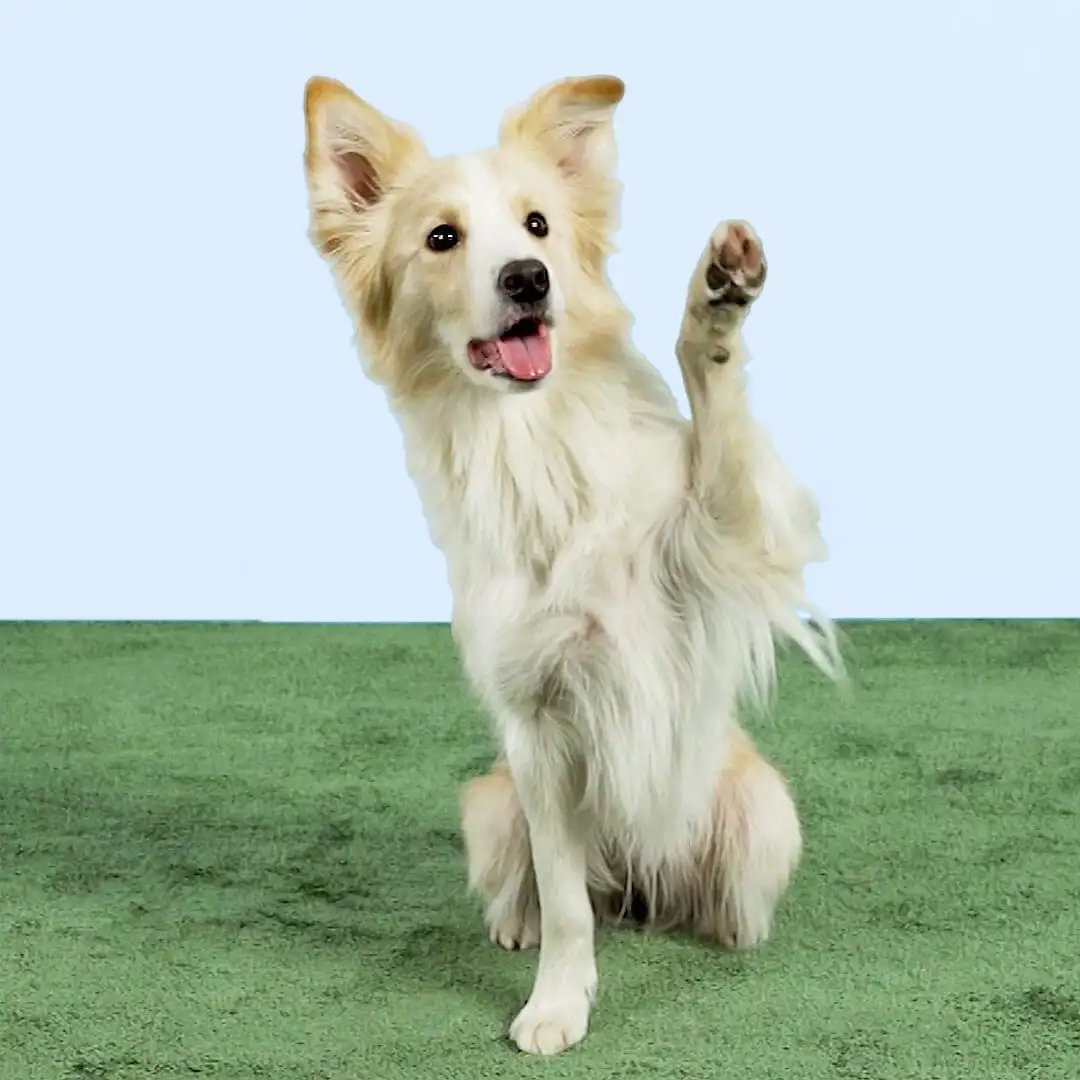
Waving is one of those tricks that instantly impresses visitors. Your dog lifts their paw and moves it through the air, as if waving goodbye. The trick builds directly on giving paw and can be learned in just a few training sessions.
- Prerequisite: your dog can give paw reliably
- Principle: pull your hand away before the paw touches it
- The dog scratches at the air with their paw (= waving motion)
- Mark immediately when the paw moves in the air
- Only move to the next level when the current one is reliable
- Short sessions of 3 to 5 minutes, 2 to 3 times daily
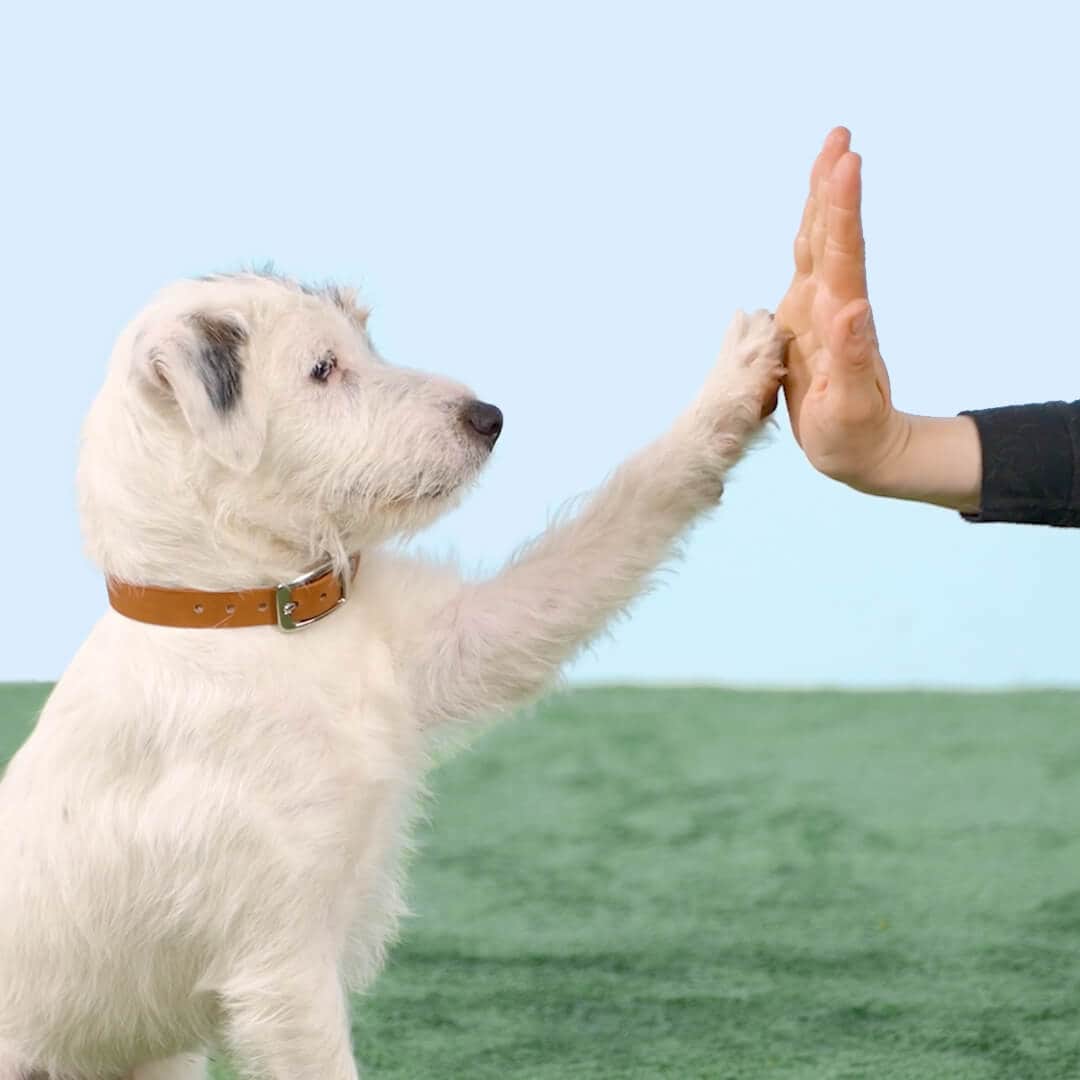
In the Hundeo app, this trick is called "Wave." The principle is simple: during the paw shake, your dog touches your hand with their paw. For the wave, you pull your hand away at the last moment. The paw grabs at nothing and makes a scratching motion in the air. That is the wave.
Training in 3 Steps
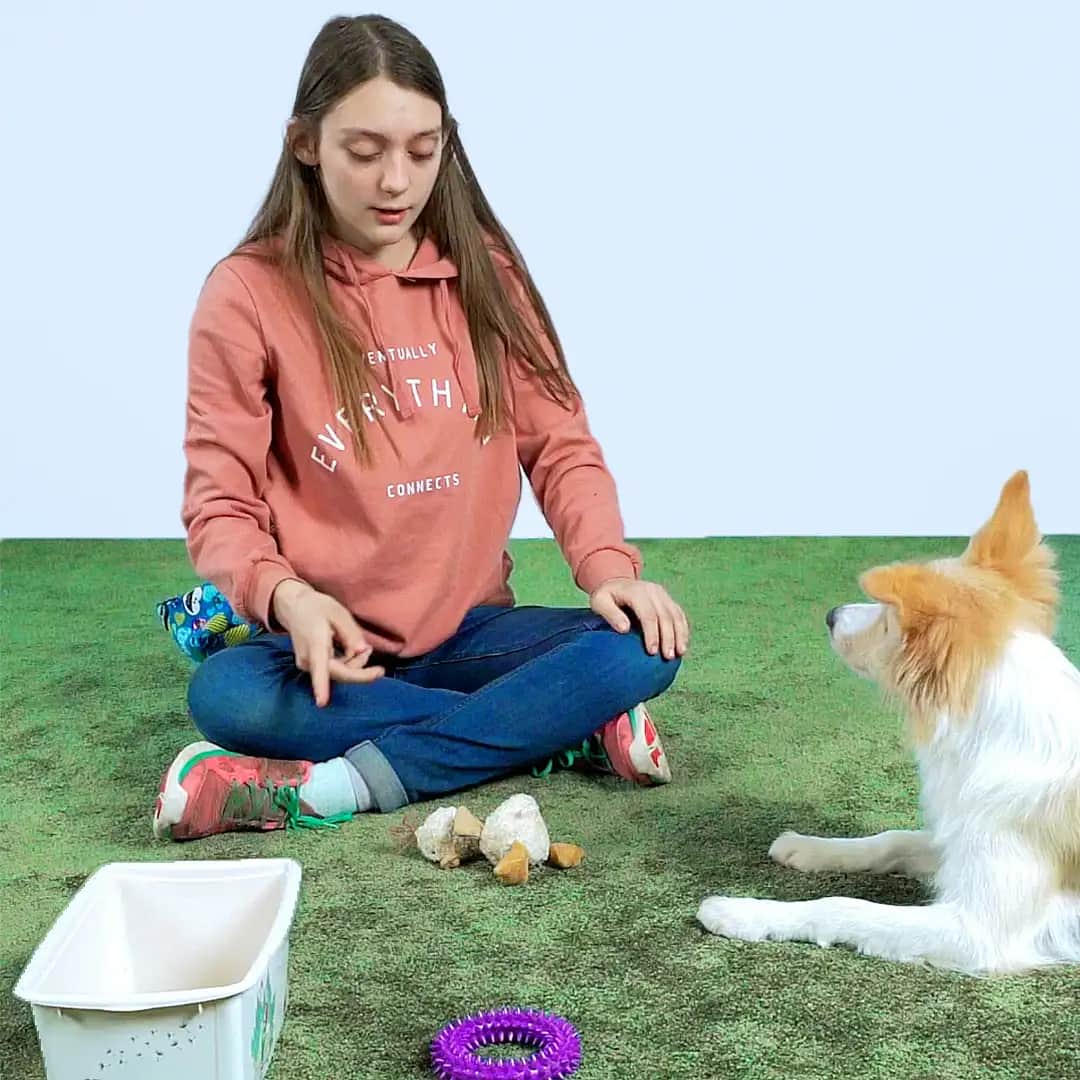
Step 1: Pull your hand away. Have your dog sit. Give the paw signal and hold out your hand as usual. But pull it away just before contact. Your dog reaches out with their paw and scratches at the air because the usual target is missing. Mark and reward at that exact moment. 10 to 15 repetitions per session. If your dog knows a clicker, it helps especially here: the timing of the marker determines whether the dog understands the paw movement in the air or keeps searching for your hand.
Step 2: Reinforce the waving motion. Your dog now understands that lifting the paw in the air pays off. Now refine the movement. Only reward clear paw movements, no longer brief taps. When the dog lifts their paw and scratches once in the air, confirm it. Then build up to 2 to 3 waving motions before the reward comes. Gradually hold your hand farther away so the dog performs the motion without your hand as a reference.
Step 3: Add a command and distance. Once the waving motion reliably happens without your hand as a guide, introduce the cue word: "Wave," "Bye," or "Bye-bye." Always the same word. Gradually increase distance: first one step away, then two, then three. Practice in different locations. What works in the living room needs to be reinforced in the garden and on walks.
Your Training Plan
0/6Common Mistakes
Marking too late. If you confirm too late, you are rewarding the lowering of the paw instead of the waving motion. The marker must come while the paw is in the air. A clicker or a short "Yes" helps with timing.
Not pulling the hand away fast enough. If your dog touches your hand, that is a paw shake, not a wave. Your hand must be gone before the paw arrives. Better to pull away once too early than too late.
Progressing too quickly. If your dog is still uncertain, do not jump straight to distance or multiple waving motions. Each level must be reliable before you start the next one.
Follow-Up Tricks
Once waving is solid, you can build on it. Waving at a distance: your dog waves at you from across the room. Waving with alternating paws, like a royal parade. Or waving combined with other dog tricks as a trick sequence.
Quick Check
Question 1 of 3What is the difference between paw shake and wave?
In our dog tricks overview you will find all tricks sorted by difficulty.
The exercises in this article are an excerpt from the Hundeo "Tricks" course. With Hundeo Pro, you get all tricks as video tutorials with step-by-step progression, training tracking, and personal help from real trainers if you run into problems.