
Puppy school gives you two things you can barely recreate on your own: controlled play with other young dogs and professional correction in real time. Young dogs that regularly play with different breeds between weeks 8 and 16 of life go on to show far less fearful and aggressive behavior later. The course doesn't replace your training at home, but it adds the most important piece: targeted socialization under supervision.
- Ideal start: 1 week after coming home, between weeks 8 and 16 of life
- Good school: max. 8 puppies per group, qualified trainer, trial session available
- Typical course: 6 to 8 weeks, once a week for 45 to 60 minutes
- Cost: 80 to 150 euros for a group course
- What's covered: socialization, basic commands, bite inhibition, getting used to the world
- Online courses add to it, but don't replace direct contact with other dogs
When to Start Puppy School?
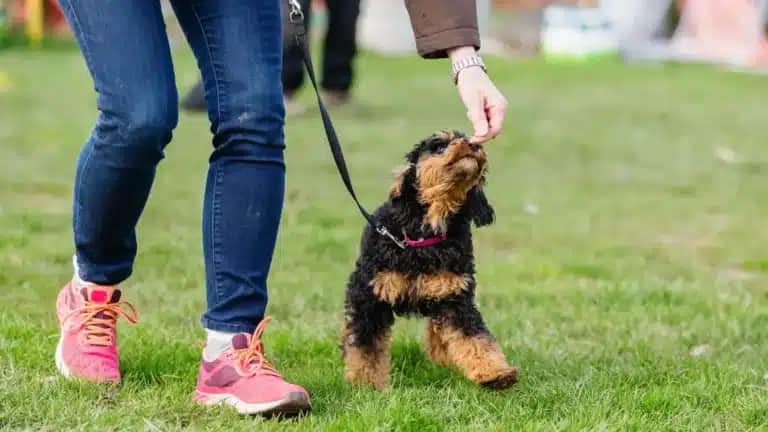
Not on day one. He needs about a week to get used to the new surroundings, the new smells, and to you. During that week you build the first bond and watch how he behaves. After that, you're good to go.
The window between weeks 8 and 16 of life is what's known as the socialization phase. During this phase he's especially open to new impressions. Whatever he gets to know now (other dogs, people, sounds, surfaces) he'll accept more easily later. Whatever he misses during this phase, he has to make up for the hard way later on.
Many vets recommend waiting until after the first vaccination series (around 12 weeks) before starting puppy school. Good dog schools require proof of up-to-date vaccinations.
How to Spot a Good Puppy School
Group size. No more than 8 puppies per trainer. With any more dogs, the trainer can't step in when play tips over.
Trial session. Reputable schools offer a free trial session. Anyone who refuses one has something to hide.
The trainer steps in. Puppies don't know their limits yet. A good dog trainer interrupts play before it escalates and explains why. A trainer who just watches isn't a trainer.
A mix of play and practice. Romping around alone isn't enough. A good session includes play phases, short training exercises (basic commands, recall), and rest breaks.
Positive methods. No leash jerks, no muzzle grabs, no alpha rolls. The school works with rewards (treats, praise, toys) and clear communication.
Age-appropriate groups. There shouldn't be any dogs older than 5 months in the group, otherwise the youngest ones get overwhelmed.
What Your Puppy Learns There
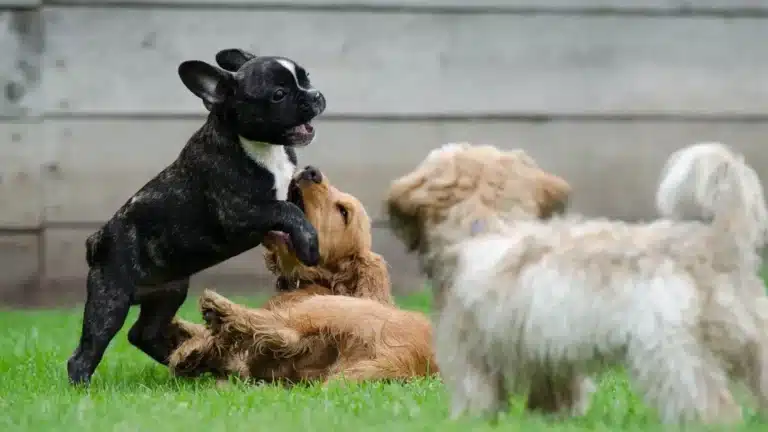
Socialization. The most important point. There he meets different breeds, sizes, and temperaments. He learns to read body language, accept boundaries, and deal with frustration (when play gets interrupted).
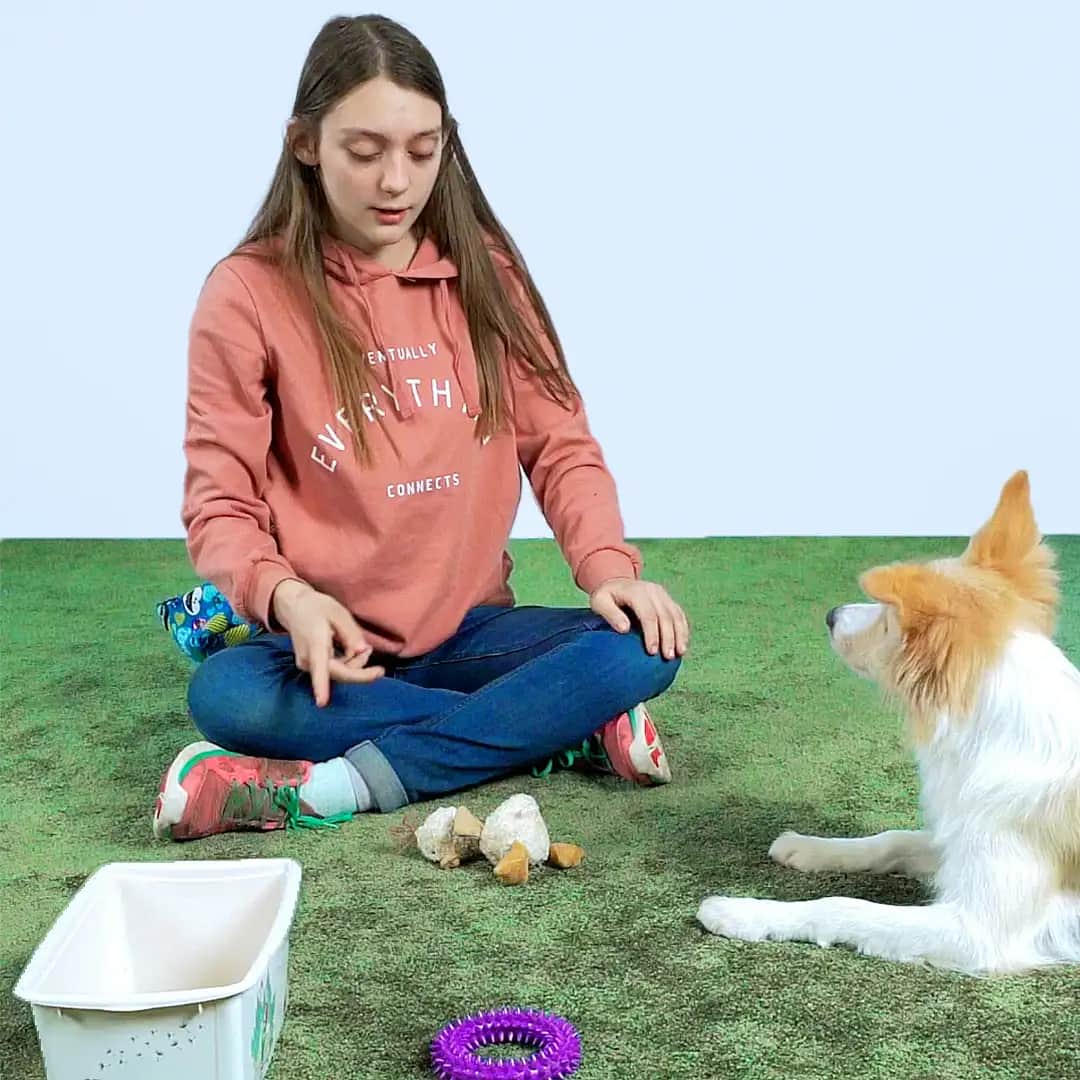
Basic commands. Sit, down, come, and leave it. In the course you practice these signals with distractions, which is much harder than at home.
Bite inhibition. In play with his own kind, he gets instant feedback: bite too hard and the other one yelps and play stops. No human can teach this so authentically.
Getting used to the world. Different surfaces (grates, rustling, wobble boards), sounds, and unfamiliar objects. He learns: new things aren't a threat.
How Long Does a Course Last?
A basic course runs 6 to 8 sessions, once a week, 45 to 60 minutes each. Many dog schools follow it up with a young-dog course starting at 5 months.
Puppy school is the starting point, not the whole program. Puppy training happens mostly at home, in short sessions spread across the day.
What Does Puppy School Cost?
| Type of course | Price range |
|---|---|
| Group course (6-8 weeks) | 80 to 150 euros |
| Private lesson | 50 to 150 euros per hour |
| Workshops (half-day) | 50 to 200 euros |
Prices vary by region, trainer qualification, and group size. In big cities you tend to pay more than in the countryside.
A detailed comparison of all course types and prices: What does a dog school cost?
Online Puppy School: A Useful Addition?
Online courses cost less (5 to 30 euros per month), are flexible, and don't require a commute. They work well for basic commands and everyday exercises.
What they can't replace: direct contact with other dogs. That only works in person. If you don't have access to a good puppy school, you can start with online courses and organize playdates with other dog owners.
More on this: Online dog training compared
Related Topics
Were you paying attention?
Question 1 of 3When is the ideal time to start puppy school?
The exercises in this article are an excerpt from the Hundeo course "Puppy Training." At Hundeo Pro you'll find all the lessons as video guides, plus training tracking and, when problems come up, personal help from real trainers.