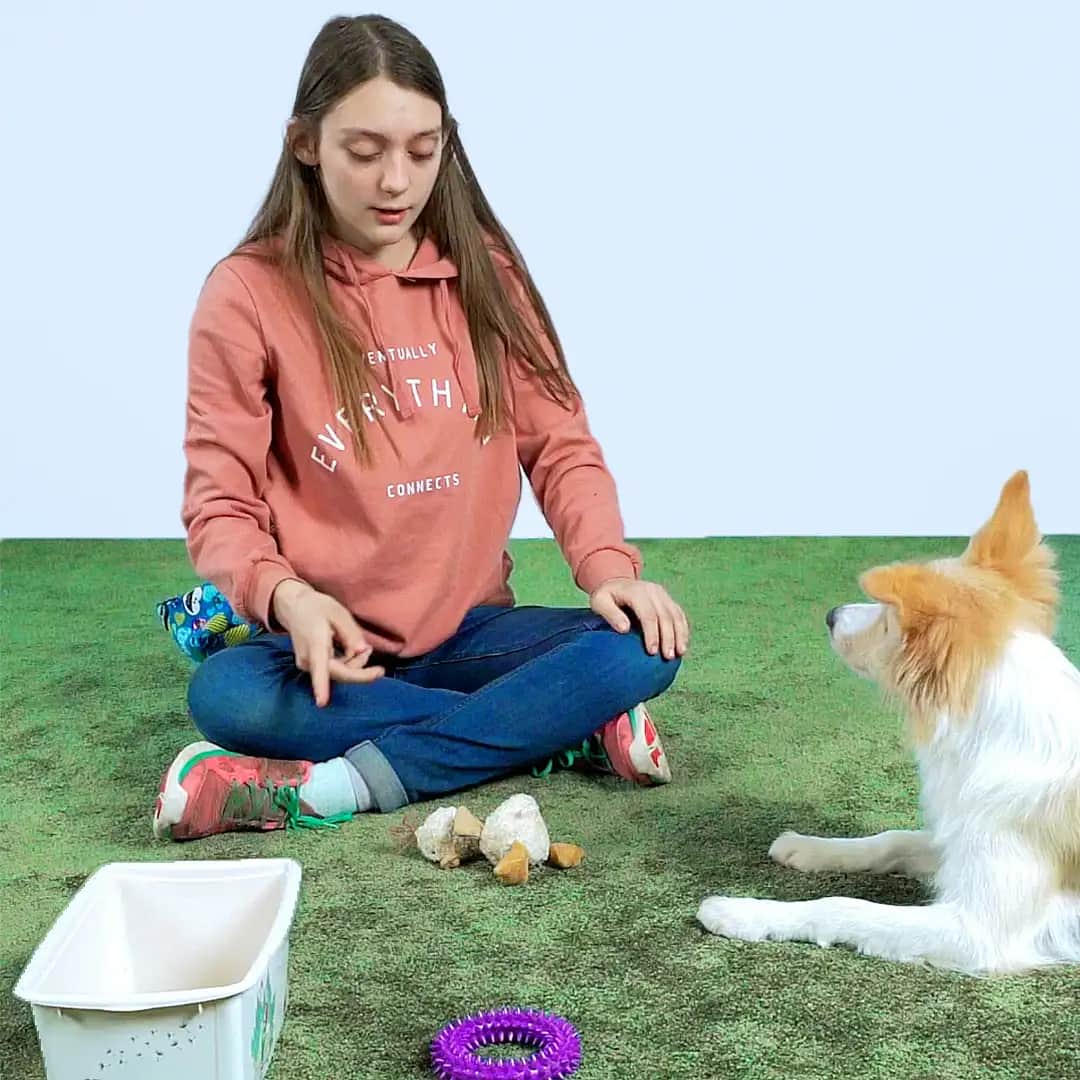

"Sit" is the simplest basic command and the gateway to structured training. Most dogs offer it naturally because they lift their head to follow a treat and automatically lower their rear end in the process. The entire exercise builds on that.
- Simplest verbal cue, the foundation for Down, Stay and all further exercises
- Guide a treat over the head and backward, the dog sits automatically
- Reward the instant the rear end touches the ground
- Introduce a raised index finger as a visual signal alongside the word
- Only move to the next level once the exercise succeeds 9 out of 10 times
- Start from 8 weeks with short sessions
Sit is the foundation for all further commands like Down, Stay and Heel. The exercise uses a natural movement: your dog lifts its head to follow a treat and automatically lowers its rear end.
The 4 Steps

Step 1: Use a lure. Hold a treat in front of your dog's nose and slowly guide it backward over the head. The dog lifts its head to follow the treat. At a certain point it has to shift its posture and the rear end drops. Mark, praise and give the treat at that moment. Don't help, don't push the hindquarters down. The dog has to perform the movement on its own.
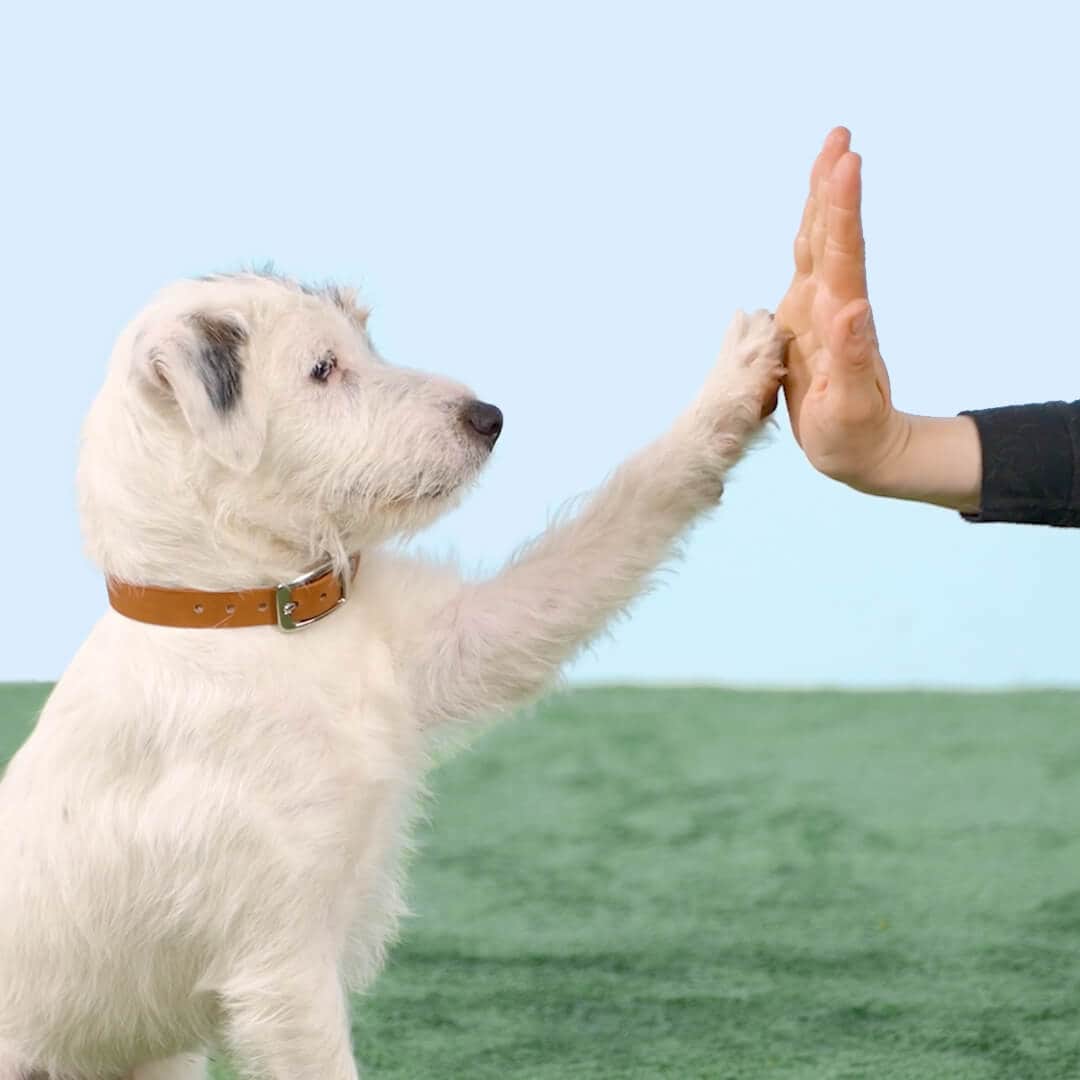
Step 2: Empty hand. After a few repetitions, perform the same movement with an empty hand. Index finger pointing up, hand moving over the head. The dog already knows the pattern and performs the exercise. Reward from the other hand. This teaches it to respond to the gesture rather than visible food.
Step 3: Build distance. Step back one pace and show the gesture. When the dog sits, walk to it and give the treat there. Don't call it to you or it will stand up. Gradually increase the distance. During this phase, introduce the cue "Sit": say the word, show the gesture, mark and reward.
Step 4: Increase distractions. Once the exercise works 9 out of 10 times in a calm environment, train in busier locations: garden, park, sidewalk. Distractions are stronger outdoors. Cheese, liver paste or cooked chicken work better than dry kibble. This is where you find out whether your dog truly understands the command or only knows the situation at home.
The 9-out-of-10 rule. Only move to the next level once the current one works in 9 out of 10 attempts. If you advance too early, you won't build stable behaviour and you'll have to go back to the beginning.
Your Training Plan
0/6Release Cue and Hand Signal
Every exercise needs a clear ending. Without a release cue, your dog decides on its own when to stand up. That undermines the entire training. Choose a short word like "OK", "Free" or "Done" and use it consistently. Your dog gets rewarded while it stays in position. Standing up after the release word doesn't get any extra comment.
The hand signal (index finger raised) has a practical reason: many dogs become hard of hearing as they age. If you train the visual gesture from the start, you can still communicate with your dog reliably later on. Always give the word and gesture at the same time until your dog has linked both.
In Everyday Life
The cue is not an end in itself. It gives you real advantages in daily life:
Before meals. Have your dog sit before you put the bowl down. Your dog learns to wait calmly instead of jumping around excitedly. This also trains impulse control.
At the kerb. Have your dog sit at every kerb before crossing the road. Combined with Stay, this becomes a safety ritual that can save lives in traffic.
When visitors arrive. Fill a small tin with treats and place it next to the front door. When someone arrives, the guest shakes the tin. Your dog knows the sound and sits, because it has learned: shaking the tin means a treat for staying calm. This way it stays settled instead of jumping on visitors. Put a small sign on the door explaining the exercise to guests.
When to Start Training?
Puppies can start training from 8 weeks. Sessions of 2-3 minutes, a maximum of 3-4 times per day. Young dogs often learn basic commands faster than adults because they don't have bad habits to unlearn yet.
Most dog owners find it works well to use every meal as a training opportunity: practise the cue once, reward, put the bowl down. That's enough. No pressure, no repeating the word if the dog doesn't react: say it once, wait, and if the dog doesn't sit, calmly end the exercise and start fresh next time.
More on this: Training from the Start
Common Mistakes
Rewarding too late. The marker word has to come the instant the rear end touches the ground. If you fumble around in your pocket for the treat first, you've missed the window. Have the treat ready in your hand beforehand.
Not fading the lure. If you always show visible food in your hand, your dog will only perform the exercise when it sees something. In Step 2, use an empty hand and reward from the other hand.
Pushing the hindquarters down. Physical pressure creates resistance and damages trust. The dog can only learn when it performs the movement on its own. If it won't get into position, guide the treat more slowly and further backward.
Repeating the verbal cue. "Sit! SIT!" The dog learns: I don't have to respond the first time. Say it once, then wait. If the dog doesn't respond, go back to the previous step.
Sit is the foundation for many more tricks. In our dog tricks overview you'll find 25 popular tricks that build on the basic commands.
Basic Commands
Did you pay attention?
Question 1 of 3How do you guide the treat so your dog sits down?
The exercises in this article are an excerpt from the Hundeo course "Basic Commands". With Hundeo Pro you get all verbal cues as video tutorials in four difficulty levels, plus training tracking and personal help from real trainers if you get stuck.