Key Takeaways:
- Why do brain games matter? They boost mental stimulation, sharpen problem-solving skills, and lower stress, which means fewer behavioral problems.
- Simple brain games: Hide-and-seek with treats, the cup game, and the "which hand" game take seconds to set up and build cognitive skills fast.
- Interactive toys: Food dispensers, puzzle boards, and snuffle mats deliver varied challenges that support your dog's mental health.
- DIY brain games: Grab bottles, boxes, and old socks to create homemade puzzles that really make your dog think.
- Training games: Mixing physical and mental activity, like agility and trick training, keeps your dog fit in body and mind.
Why Dog Enrichment Is So Important
Ever wonder why brain games matter so much for your dog? They're way more than a pastime, they're the key to mental stimulation and better overall health.
Just like you, your dog gets bored. A little variety goes a long way. Beyond walks, your dog needs mental exercise to stay balanced and happy in everyday life. Physical activity is essential, but mental stimulation matters just as much. Brain games challenge your dog's mind and keep them sharp and engaged.
Brain games build your dog's ability to solve problems and make decisions. Working through puzzles together also strengthens your bond and deepens mutual understanding. Mental challenges cut down on behavioral problems caused by boredom or stress. They give your dog meaningful engagement and help channel excess energy in a productive way.
A dog that isn't mentally stimulated will find their own entertainment, and you probably won't like it. Think knocked-over trash cans and chewed-up shoes. Scolding won't fix the problem. You need to tackle the root cause. Add variety to the day with brain games, and watch how much your pup lights up.
Benefits
Brain games aren't just fun, they play a real role in your dog's mental health and overall well-being.
-
Mental Stimulation Brain games keep your dog's mind active and sharp. They maintain mental agility, boost cognitive abilities, and feed your dog's natural curiosity and desire to explore.
-
Problem-Solving Skills Brain games push your dog to solve problems and pick up new skills. Every solved puzzle builds confidence. Over time, your dog feels more secure and capable.
-
Stress Relief Brain games give your dog a constructive way to burn off stress and anxiety. Focusing on a task calms the mind. Regular mental challenges also prevent the boredom that so often leads to destructive behavior.
-
Well-Being Solving puzzles and mastering challenges lifts your dog's emotional well-being. Brain games add variety to daily life and genuinely bring your dog joy.
How to Keep Your Dog Entertained Through Play
You've probably heard it a hundred times: dogs need to stay busy. But how does that actually work? What do dogs enjoy? How do you know they're having fun?
The answer is simple: experiment. Does your dog love rummaging through stuff? Are they obsessed with following scents? Do they enjoy figuring out puzzles to score the big reward? The easiest way to find out is to try different games. Your dog will love the one-on-one time. Set up a game and watch, do they dive right in, or do they stare at it like "what am I supposed to do with this?"
Your dog's breed gives you a rough idea of how much mental stimulation they need. But every dog has their own personality and preferences. You know your dog best. Together, you'll figure out their favorite game.
What Types of Dog Enrichment Are There?
Dog enrichment comes in two flavors: physical activity and mental stimulation. A well-balanced dog needs both.
Physical exercise is the easy part. For many dogs, daily walks do the trick. If that's not enough, try biking, jogging, playing fetch, or dog sports like agility. Mental stimulation is where most owners get stuck. What does it even mean? Dogs are incredibly smart animals. That intelligence needs an outlet, through training, learning new tricks, and play.
When your dog follows a scent, their brain is working overtime. Nose work is fun and surprisingly tiring. Use that to your advantage by throwing in quick brain games throughout the day.
# 1) Simple Brain Games
Brain games are a fantastic way to challenge and entertain your dog. The best part? You don't need special toys or equipment for most of them. Here are some simple but effective brain games to try.
Hide and Seek With Treats
Hide a few treats around your house or yard while your dog watches. Then give the command to find them. This game sharpens your dog's nose and encourages active exploration.
Cup Game
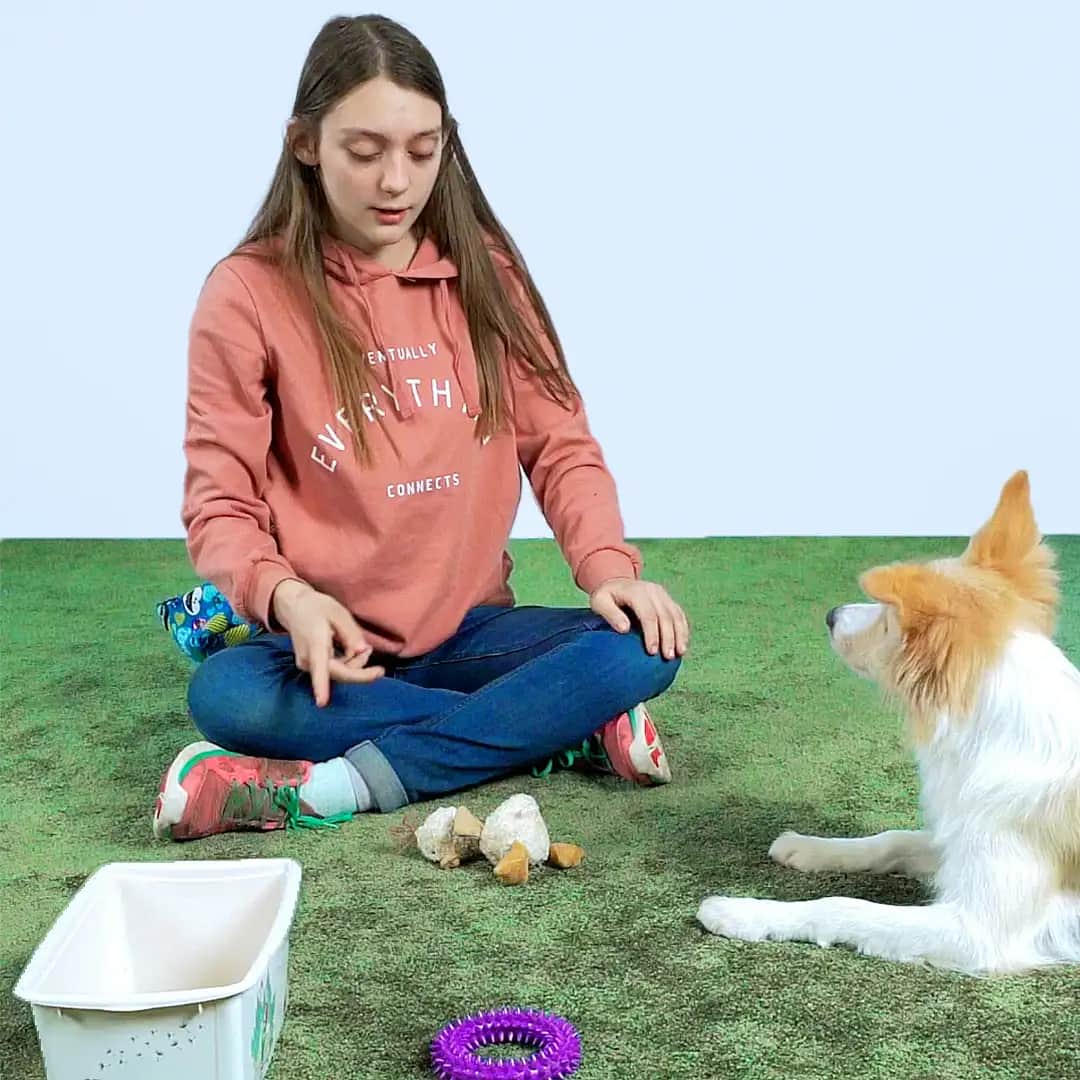
Grab three cups or small bowls and hide a treat under one. Let your dog watch as you shuffle the cups, then see if they can pick the right one. Great for building attention and memory.
Name Learning Game
Pick a specific toy and say its name while showing it to your dog. Then hide it somewhere easy and ask your dog to fetch it by name. Over time, your dog learns to identify toys by name, a serious cognitive workout.
"Which Hand" Game Hide a treat in one hand. Hold both closed fists out and let your dog guess which hand it's in. This one sharpens decision-making and sense of smell.
Simple Search Tasks
Hide a favorite toy or treat in a fairly obvious spot and send your dog to find it. This builds independence and problem-solving skills.
#2) Interactive Toys and Puzzles
Interactive toys and puzzles sharpen your dog's thinking skills while keeping things fun.
Food Dispensers
These toys release treats when your dog rolls, shakes, or nudges them in the right way. They tap into natural hunting instincts and problem-solving skills, and they keep your dog busy for a good long while.
Puzzle Boards
Puzzle boards have compartments where you hide treats. Your dog has to figure out how to get to them, sliding, lifting, or turning pieces. They build concentration and patience and offer a real mental workout.
Intelligence Toys
These are the advanced versions. They require a series of steps to reach hidden food, sliding elements, turning mechanisms, or multi-stage puzzles. Perfect for dogs that need a tougher challenge.
Snuffle Mats
Snuffle mats are fabric mats packed with hiding spots for treats. Your dog uses their nose to sniff out the goodies. It's a calming, natural activity. You can also DIY one, just use a shaggy rug and tuck treats into the fibers.
Interactive Food Balls, Rings, and Kongs
These toys come in shapes that challenge your dog both mentally and physically, rolling, chasing, and problem-solving all at once. They're ideal for active dogs that need to burn energy and brainpower at the same time. Mix and match these toys to add variety to your dog's routine. You'll keep boredom at bay while actively supporting their mental health and well-being.
#3) DIY Brain Games
You don't need to spend a fortune to challenge your dog's brain. Plenty of effective games use stuff you already have at home. Here are some creative ideas.
DIY Snuffle Box
Grab a box and some old towels or fabric scraps. Crumple them up, hide treats inside, and toss everything in the box. Let your dog dig around and sniff out the goodies. It sharpens their nose and makes for a fun scavenger hunt.
Bottle Spin
Take a sturdy plastic bottle and a stick or broom handle. Poke holes in the bottle, fill it with treats, and slide it onto the stick. Your dog has to figure out how to spin the bottle so treats fall out. It trains problem-solving and coordination.
Cardboard Maze
Stack up some cardboard boxes and scatter treats inside. Build a mini maze and let your dog navigate through it to find the rewards. This one builds spatial awareness and problem-solving skills.
Cup and Ball Game
Grab a few cups and a small ball or toy. Hide the ball under one cup, shuffle them around, and let your dog pick. It sharpens observation skills and decision-making.
DIY Agility Course
Use household items, chairs, broom handles, pillows, to build a simple agility course in your yard or living room. Guide your dog through and reward their effort. It blends physical activity with mental challenge. These DIY brain games give your dog fresh challenges without breaking the bank. They boost mental fitness and double as a great bonding activity.
#4) Training Games for Mental Development
Training games that work both body and brain are a powerhouse combo for keeping your dog fit and sharp. They're fun, practical, and easy to weave into your daily routine.
Fetch With Commands
Add basic commands to fetch, "sit," "down," or "stay", before you throw the toy. It builds obedience and focus on top of the physical workout.
Hide and Seek
Hide yourself or a toy and let your dog track you down. This trains nose work and problem-solving while getting them moving.
At-Home Agility Training
Set up a simple agility course with everyday objects. Run your dog through slalom weaves, jumps, and tunnels. It sharpens physical agility, builds focus, and teaches them to follow instructions.
Trick Training
Teach new tricks like "shake," "roll over," or "sit pretty." Tricks boost cognitive flexibility while improving coordination and balance.
Food Ball Games
Use a food ball that drops treats when your dog rolls it around. Let them figure out how to score the reward. It blends physical effort with mental problem-solving. These training games add spark to your dog's routine while challenging them on every level. They strengthen your bond and support a healthy, balanced lifestyle.
#5) Games for Advanced Thinkers
Got a dog that's already a brain game pro? Time to level up. These advanced activities push cognitive skills further and keep things interesting.
Advanced Hide and Seek
Crank up the difficulty by hiding treats or toys in hard-to-reach spots. Use multiple hiding places at once. This builds persistence and next-level problem-solving.
Complex Trick Training
Chain multiple tricks together so your dog performs several commands in a specific order. It strengthens memory and the ability to handle complex sequences.
Interactive Puzzle Toys
Bring out puzzle toys that require multiple steps, turning, sliding, and multi-stage mechanisms. These build cognitive flexibility and strategic thinking.
Fetch With Obstacles
Add jumps or tunnels to your fetch game. Your dog has to retrieve the toy while navigating obstacles. It's physical agility meets mental challenge.
Scent Differentiation
Teach your dog to tell different scents apart and find the right object by smell alone. This trains scent precision and deep focus. These advanced games don't just challenge your dog's brain, they deepen your bond as you tackle complex tasks together. They keep your dog mentally sharp and prevent boredom by always raising the bar. Prefer a more visual approach? Our app has additional brain game ideas with step-by-step video instructions. Discover the Hundeo dog training app
Maybe there's a thunderstorm raging outside, the summer heat is unbearable, or you just want some quality time at home with your dog. These indoor brain games are easy to set up and keep your pup entertained.
Game #1: Sock Line
All you need: old socks, a clothesline (or something similar), and treats. Stuff the socks with treats and hang the clothesline at a height your dog can comfortably reach.
Drape the socks loosely over the line so your dog can pull them down easily. Let them figure it out on their own first. If they get stuck, hype up the socks, show them these things are interesting and totally worth tugging on. If your dog struggles at first, reward them with a treat every time they pull a sock down. Once they get the concept, let the real reward be the treat hidden inside the sock. (Fair warning: the sock might not survive.)
Once your dog has it down, raise the bar. Hang the line a bit higher so they have to jump, or wrap the socks tighter so they're harder to pull off.
Game #2: Treasure Chest
This one puts your dog's nose front and center. Grab a cardboard box (sized so your dog can comfortably peek over the edge), some socks, newspaper, and treats. The box should be shallow enough that their nose can reach the bottom.
Fill the box with crumpled socks, newspaper, or any filler material. Bury treats throughout so your dog can't see them. Set the box in front of your dog and let the sniffing begin. They'll follow the scent and root around to find the hidden goodies. This game takes seconds to set up, and most dogs absolutely love it.
Game #3: Spinning Rolls
You'll need cardboard tubes, string, tape, scissors, and treats. Fold one end of each tube shut and tape it closed so nothing falls out.
Poke a small hole in each tube and thread them side by side onto the string. Tie the string at your dog's head height, between two table legs works great. The open ends should face up. Drop a treat into each tube. Your dog has to nudge the tubes with their nose or paw to flip them over and spill the reward onto the floor. If they don't get it right away, demo it yourself or point to the tubes. They'll quickly learn that moving the tubes equals treats.
If regular walks are starting to feel monotonous, throw a brain game into the mix! It makes outings way more fun, and your dog will come home mentally satisfied.
Game #1: Tracking
All you need: your dog's favorite treats. Stick to lawns you know well or have checked for hazards, no dangerous objects or toxic substances.
Place a strong-smelling treat on the ground. At first, drop a piece every few feet along the trail so your dog scores small wins along the way. At the end of the trail, leave the ultimate reward, the jackpot. Celebrate big when they find it. That excitement tells your dog they nailed it. Start with trails of about 15-20 feet. Focused sniffing is seriously tiring for your dog's brain. Gradually extend the distance over time. Well-trained dogs can handle 300 feet or more. The jackpot at the end is always the goal.
Game #2: Forest Search Game
Heading to the woods? Perfect. Bring treats and your dog's favorite toy and turn the forest into a giant playground.
Have your dog sit and watch as you hide their toy and some treats behind tree trunks, under moss, or in branches. Once your hiding spots are ready, send them off to find everything. Give verbal praise every time they discover a hidden reward. They have to remember where you were and use their nose to track things down. It's a serious brain workout.
Game #3: Triangle Exercise
You just need a toy and some treats. Check the area for hazards before you start.
Tell your dog to sit in one corner of an imaginary triangle and stay. Place a toy or treat in the second corner. Say "no" so your dog knows that corner is off-limits, for now. Move to the third corner and call your dog. They have to resist the urge to bolt straight for the reward and come to you instead. When they do, praise them and hand over a treat from your pocket.
Then send them to the corner with the toy or treat. That's the big payoff for resisting temptation and following your command. After a few successful rounds, shrink the triangle. As the distance to the reward gets shorter, your dog has to work harder to resist. The impulse control challenge ramps up with every round.
Once your dog has mastered this, try throwing the toy into the corner. The sudden movement amps up the temptation. But the rule stays the same: come to you first, then go for the prize.
Safety and Best Practices
Brain games are awesome, but keep a few safety basics in mind so your dog stays safe while having fun.
Supervision During Play
Stay close and watch your dog during brain games. Make sure they don't get frustrated or put themselves at risk. Look for signs of stress, excessive panting, restlessness, or losing interest. If you spot any, stop the game.
Choose Safe Toys
Pick toys that match your dog's size and chewing style. Avoid small parts that could be swallowed. Check toys regularly for cracks, loose parts, or other damage.
Adapt to Your Dog
Tailor games to your dog's age, abilities, and interests. Not every game works for every dog. Start easy and gradually increase the difficulty so they don't get overwhelmed.
Take Enough Breaks
Give your dog downtime between brain games. Keep sessions short, especially with demanding puzzles, to avoid mental burnout.
Use Positive Reinforcement
Show your dog they're on the right track with praise and treats. Positive reinforcement is a powerful motivator.
Can a Dog Get Bored?
Absolutely. And when they do, they find their own entertainment, which usually means getting into things they shouldn't.
How Long Should You Play With Your Dog?
Your dog needs daily attention. The exact amount varies. Some dogs are happy with 2-3 short games per week on top of walks. Others crave 1-2 hours of engagement every day.
Can I Keep My Dog Entertained Indoors?
You won't have room for wild romping sessions in an apartment, but there are tons of brain games you can play indoors. Check the ideas above for inspiration.
How Can I Play With My Dog?
Every dog has different preferences. The best way to find out what yours loves is to experiment. That said, every dog benefits from a mix of physical and mental activity.
Conclusion
There are endless ways to keep your dog engaged, and the games don't have to be complicated. The moment your dog's nose goes to work, their brain kicks into high gear.
Every dog needs both physical and mental stimulation, but they're all individuals. What one dog loves, another might ignore completely. Get creative, test different brain games, and discover your new favorite activity together.