
Your dog can Sit, but at a restaurant, the vet, or on public transport that's not enough? It also needs to lie down and stay calm, sometimes for several minutes. That's exactly what "Down" is for. In 4 steps you'll build this command, from luring with a treat to the hand signal to reliable downs under distraction.
- Progression: lure, hand signal, distance, distraction
- Guide the treat straight down, not horizontally away from the dog
- Hand signal: flat palm facing downward toward the ground
- Leg bridge as a training aid if the dog won't lie down
- A relaxed Down is recognised by the hip tilted to the side
- A release cue is mandatory for every exercise
- Keep training sessions to 2-3 minutes
Once Sit is reliable, Down is the logical next step. In situations like restaurants, the vet, or public transport, your dog needs a calm down on cue.
The 4 Steps

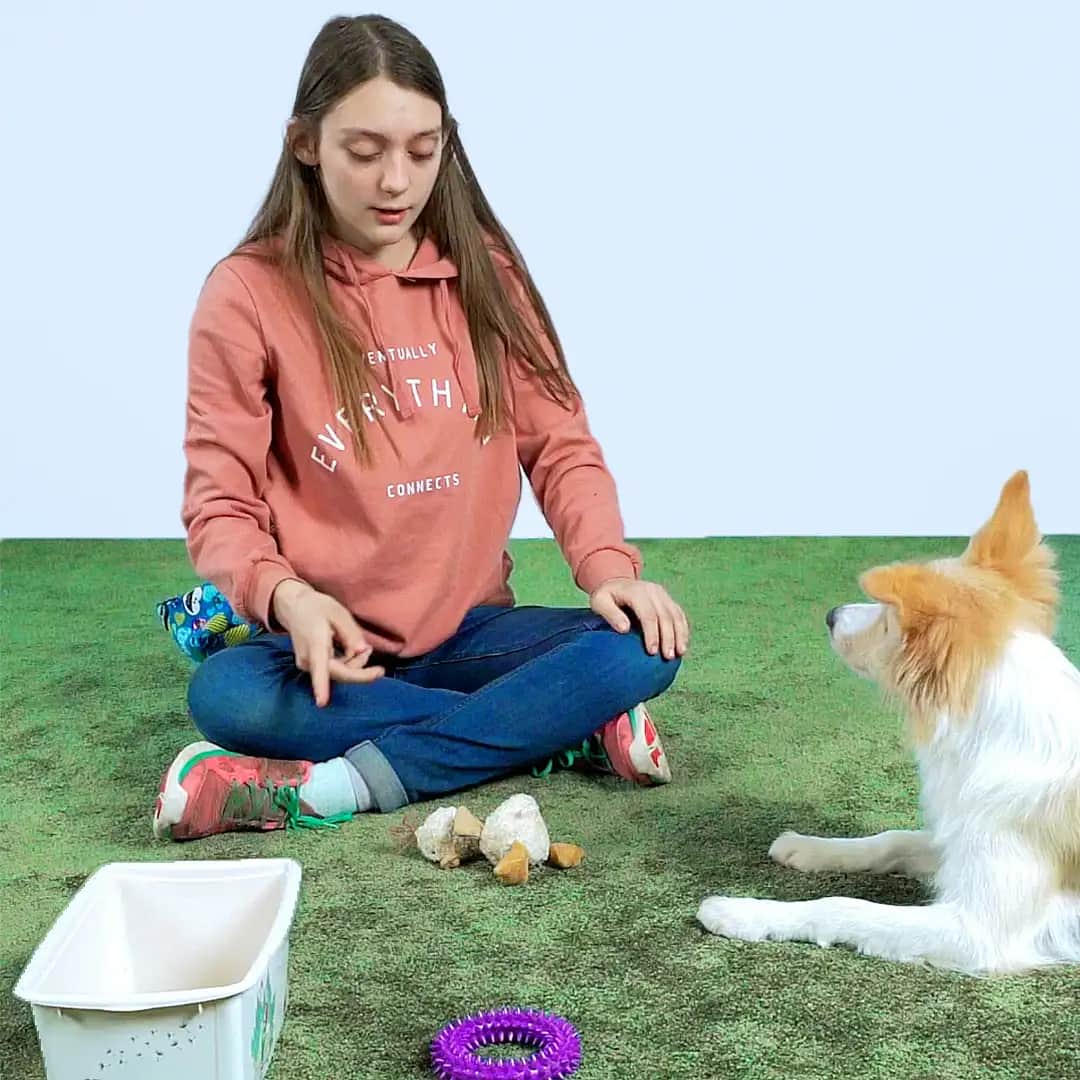
Step 1: Use a lure. Put your dog in a Sit. Hold a treat right in front of its nose and guide it straight down to the ground, directly between the front paws. Not horizontally away from the body. The dog follows the treat with its nose, lowers its head and shoulders, and lies down. As soon as its chest and belly touch the ground: praise immediately and release the treat. Don't push down on the collar or force it. The dog must find the movement on its own.
Step 2: Introduce a hand signal. After a few successful repetitions, make the same hand movement with an empty hand. Flat palm, facing downward, straight toward the ground. The dog already knows the pattern and will lie down. Reward from the other hand. Now add the verbal cue "Down": say the word, show the gesture, mark and reward. Word and gesture always together until the dog links both reliably.
Step 3: Build distance. Take one step back and give the hand signal. If the dog lies down, walk to it and reward there. Don't call it to you or it will stand up. Gradually increase the distance. At the same time, build up duration: first hold the Down for 2 seconds, then 5, then 10. Reward while the dog is still lying down.
Step 4: Increase distractions. Once the exercise works 9 out of 10 times in a distraction-free environment, practise in busier locations: garden, sidewalk, park. Higher-value treats like cheese or cooked chicken help maintain focus. This is where you'll see whether the dog truly understands the command or only knows it in the living room.
The 9-out-of-10 rule. Only move to the next level when the current one works 9 out of 10 times. If you add distance or new stimuli too early, you'll have to go back to the beginning.
Your Training Plan
0/6Relaxed vs. Tense Down
Not every lying position is the same. In a tense Down, the dog lies straight with its hind legs tucked under the body, ready to spring up. In a relaxed Down, the hip tilts to the side and the hind legs rest loosely beside the body. Only a relaxed Down is suitable for longer waits in everyday life.
If the dog always stays tense, train in calm situations: after a walk, on its mat, in the evening in the living room. Specifically reward the moments when the dog's hip tilts to the side.
When It Doesn't Work
Leg bridge as a second approach. Your dog doesn't understand the movement? Sit on the ground and raise one leg to form a tunnel. Guide the treat under your leg. The space is too tight to stand, so the dog has to crouch and lies down. As soon as it's down: mark and reward. Phase out this helper method after 5-10 successful repetitions.
Uncomfortable surface. Some dogs refuse to lie down on cold tiles or wet grass. This isn't disobedience but instinct. Start on a soft surface, stay patient, and only later practise on other ground.
Comprehension problems. The dog jumps up or walks toward the treat? The hand movement is too fast or too far. Back to the beginning: straight down, slowly, directly between the front paws.
Common Mistakes
Pulling the treat horizontally. If you guide it forward instead of downward, the dog crawls forward rather than lying down. Only a vertical motion produces the down.
Pushing the dog down. Physical pressure creates counter-pressure. The dog tenses its muscles and resists. This damages trust and is counterproductive for dog training.
No release cue. Without a clear ending, the dog decides on its own when to get up. A word like "OK" or "Free" ends every exercise. That way it knows: as long as no signal comes, I stay down.
Repeating the command. "Down, Down, DOWN!" Every repetition weakens the signal. Say it once, wait. If the dog doesn't respond, go back one level.
Once Down is solid, you can build on it: in our dog tricks overview you'll find 25 popular tricks that build on the basic commands.
Basic Commands
Did you pay attention?
Question 1 of 3How do you guide the treat so your dog lies down?
The exercises in this article are an excerpt from the Hundeo course "Basic Commands". With Hundeo Pro you get all verbal cues as video tutorials in four difficulty levels, plus training tracking and personal help from real trainers when you need it.