
Your dog spots a deer, a squirrel, or a hare and takes off. In that moment he's beyond reach, because endorphins are released during the chase. The chasing itself is the reward, whether or not he catches the prey. That's exactly why ordinary treats aren't enough of a counterweight. Anti-hunting training goes deeper: he learns to control the impulse and orient toward you before hunting mode kicks in. The concept, shaped by dog trainer Pia Gröning, relies on impulse control rather than correction.
- The hunting drive is genetic and can't be trained away, only channeled
- Especially strong in Beagles, Dachshunds, German Shorthaired Pointers, terriers, and sighthounds
- Basic obedience (sit, down, stay, heel) is a prerequisite
- Long line and harness until the recall training is solid
- The training takes months and has to be refreshed regularly afterward
- For a strong drive: get professional guidance from a dog trainer
Why dogs hunt

Hunting is in the genes. Dogs descend from wolves, which fed on prey animals. Some breeds were bred specifically for hunting: Beagles for chasing hares, Dachshunds for going to ground, German Shorthaired Pointers for pointing, terriers for hunting rats, sighthounds for chasing by sight. In these breeds the drive is especially strong. But every dog has a certain hunting predisposition.
The triggers are moving objects: wild animals, joggers, cyclists, fluttering birds. The dog locks onto the target, his body tenses, and the next moment he's off. During the chase the body releases endorphins. Hunting feels so good that he tunes out everything else: calls, whistles, other dogs. That's what makes the behavior unwanted. This is why a simple "Come!" doesn't work in that state.
The danger: he runs across a road, gets hurt in rough terrain, or chases wild animals to exhaustion. In many German states, hunters are allowed to shoot dogs that are poaching.
Prerequisites
Before you start building this up, basic obedience has to be solid. A dog that doesn't respond to "Here" or "Down" under normal conditions definitely won't when a deer runs past.
Basic commands. Sit, Down, Stay, Heel, and a reliable recall have to work in a low-distraction environment. That's the foundation this training builds on. If you haven't established basic obedience yet, you'll find a starting point with dog training.
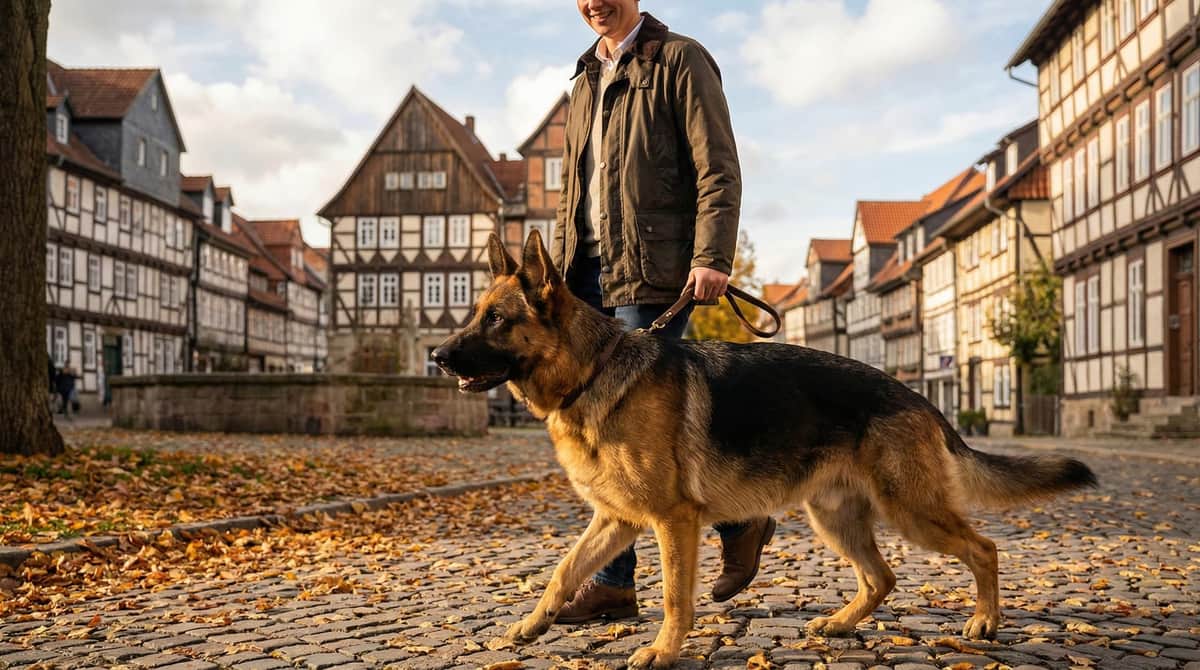
Long line and harness. As long as the recall isn't reliable, the dog belongs on a long line (5 to 10 meters). Always attach it to the harness, never the collar. If he hits the end of the line at speed, the harness spreads the force across his body instead of his neck.
High-value reward. Hunting triggers happy hormones. The counterweight has to be just as strong. Ordinary kibble won't cut it. Fresh meat, liverwurst, tripe, or his absolute favorite toy. The reward has to be appealing enough that the dog actually turns away from the wild animal.
Training in 3 steps

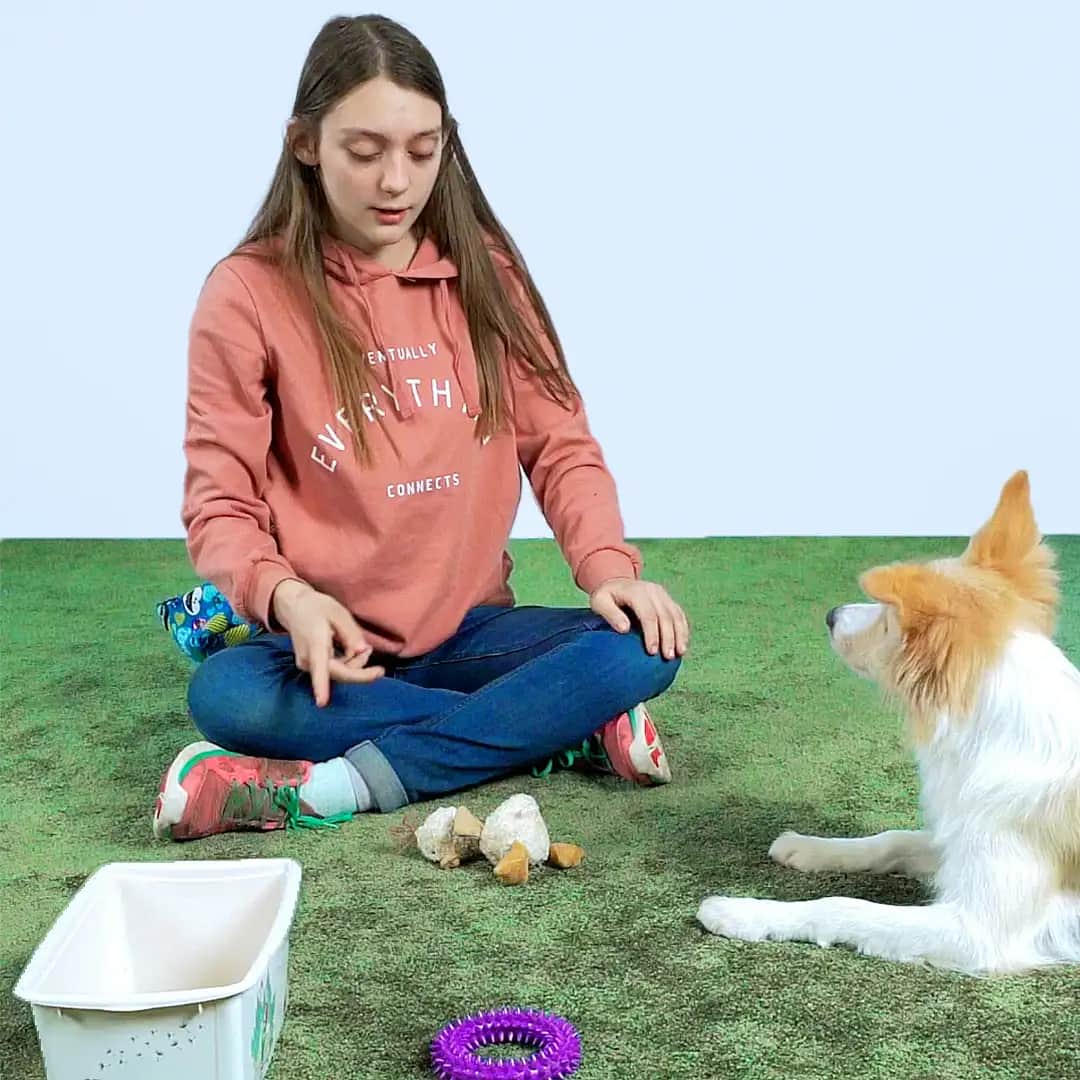
Step 1: Build impulse control. The dog learns to notice a trigger without reacting right away. It starts at home: place a treat on the floor and have him wait until you release it. Then raise the difficulty outdoors: put him in a down, walk past him, walk around him, walk away. Increase the distance and duration step by step. Once he reliably stays in the down around distractions (other dogs, sounds, smells), the foundation is laid.
Step 2: Recall training on the leash. Use the leash on your walks. When the dog locks onto a wild animal but hasn't taken off yet: give the recall. If he responds, reward him with the high-value treat right away. If he doesn't respond, stop the leash (don't yank it) and calmly guide him back to you. Then increase the distance to the trigger next time and make it easier. The decisive moment is before he takes off. Once he's picked up speed, the recall is nearly impossible, because the endorphins drown out everything. So learn to read the early signals: ears forward, body stiffening, gaze locked on.
Step 3: Reinforce it in everyday life. Once the recall works in familiar spots, switch up the locations. Different routes, different times of day, different kinds of wildlife. Every new situation is a new challenge, because dogs generalize poorly. Alongside that, add in orientation training: change direction on your walks without calling. Hide behind a tree when he isn't paying attention. He learns to check in with you regularly instead of striking out on his own.
Your training plan
0/6Alternative activities

A hunting-driven dog needs activities that steer his drive into focused channels. Dog sports offer exactly that: physical exertion, concentration, and teamwork with the owner.
Retrieving and dummy work put the prey drive to deliberate use. He gets to search, chase, and bring it back, but by your rules. Mantrailing (tracking people) works the nose without feeding the prey drive. Agility improves concentration and the bond at the same time.
The dog whistle is a useful tool in anti-hunting training. It carries farther than the human voice and always sounds the same, regardless of excitement or emotion. Condition the whistle tone at home (whistle = high-value reward) and then use it outdoors.
Were you paying attention?
Question 1 of 3Can you completely train the hunting drive out of a dog?
The exercises in this article are an excerpt from the Hundeo course "Basic Obedience." With Hundeo Pro you'll find all the lessons as video guides with a step-by-step build-up, plus training tracking and, when problems come up, personal help from real trainers.